

In today’s digital age, mastering search engine optimization (SEO) is essential for anyone creating content online. Whether you’re a blogger, marketer, or business owner, you’ve likely heard the term keyword optimization. Among the tools designed to help content creators measure and refine their SEO strategies, the keyword density checker by Alaikas stands out as a reliable instrument to help writers align with best SEO practices. In this comprehensive article, we will explore what this tool is, why it matters, how it works, and how it fits into a larger SEO strategy that prioritizes quality and relevance. This article is crafted not only to inform but also to help you apply actionable strategies for better search visibility and engagement.
Understanding keyword density is fundamental to search engine success. However, knowing how to measure and apply it effectively is equally crucial. With the keyword density checker by Alaikas, content creators have a robust tool that blends simplicity with deep insights, allowing for a clear view of how keywords function within a text. Before we delve deeper into the various facets of this tool, we will unpack the concept of keyword density itself and explain its role in modern SEO.
What Is Keyword Density and Why Does It Matter?
Keyword density refers to the proportion of times a particular keyword appears in a piece of content relative to the total number of words. In essence, it helps indicate how frequently a target keyword occurs within the text. Historically, SEO practitioners used keyword density as a primary metric to determine a page’s relevance to a specific search query. Over time, search engines like Google have evolved to prioritize context, relevance, and user experience over rigid keyword repetition.
Despite these advances, keyword density remains a useful metric for ensuring that your content clearly signals its purpose to both search engines and readers. When used thoughtfully, keyword density can contribute to improved rankings, better thematic focus, and enhanced readability. Too little keyword presence might make it harder for search engines to understand the main topic of a page. Too much can trigger spam filters or make the content feel unnatural and forced.
That is where the keyword density checker by Alaikas becomes invaluable. This tool helps writers find the perfect balance, ensuring that target keywords are present in a meaningful and natural way without provoking penalties for keyword stuffing.
An Introduction to Keyword Density Checker by Alaikas

The keyword density checker by Alaikas is a tool designed to analyze your text and calculate the frequency of your chosen keywords. It goes beyond basic counting to provide insight into how your keywords are distributed throughout your content. Unlike generic word counters, this tool specifically focuses on keyword analysis, helping you optimize for both humans and search engines.
The process is simple. You input your content and specify your target keywords. The tool then scans your text, checks the occurrence of each keyword, and determines the percentage of total word count each one represents. It offers a clear and immediate overview, allowing you to make adjustments instantly.
What sets this tool apart from other keyword checkers is its balance of precision and usability. It doesn’t overwhelm users with unnecessary data, nor does it sacrifice depth for simplicity. Whether you’re writing a short blog post or a long-form guide, the keyword density checker by Alaikas provides feedback you can use to enhance keyword relevance without sacrificing readability.
How to Use Keyword Density Checker by Alaikas Effectively
Before you begin optimizing content using the keyword density checker by Alaikas, you need to establish your SEO goals clearly. Are you targeting a specific niche phrase? Are you optimizing for local search, long-tail keywords, or high-volume terms? Once your strategy is defined, you can use the tool to check if your keyword presence aligns with your objectives.
First, gather your text and determine which keywords are most important for your topic. These should be terms that your target audience is likely to search for. In addition to your primary keyword, consider supporting keywords and semantically related terms that help reinforce your topic’s context. For example, if your primary focus is on SEO tools, related phrases might include SEO optimization, content analysis, and search visibility.
Next, paste your content into the keyword density checker by Alaikas. Enter your target keywords and run the analysis. The tool will show you how often each keyword appears and what percentage of your total word count it represents. Ideally, your primary keyword should fall within a healthy range — currently recommended between one and one and a half percent of the total word count for long-form content.
This balance ensures that the content feels natural to readers while signaling relevance to search algorithms. At the same time, the tool highlights overused keywords, helping you avoid penalties for keyword stuffing. It also displays underrepresented terms, which can inspire you to make better use of important phrases.
As you refine your text, the keyword density checker by Alaikas allows you to reanalyze quickly, ensuring that every revision moves your content closer to your SEO goals. This iterative process reinforces thoughtful editing rather than mechanical repetition — a key principle of modern SEO.
Integrating Keyword Density Checker by Alaikas into Your Editorial Workflow
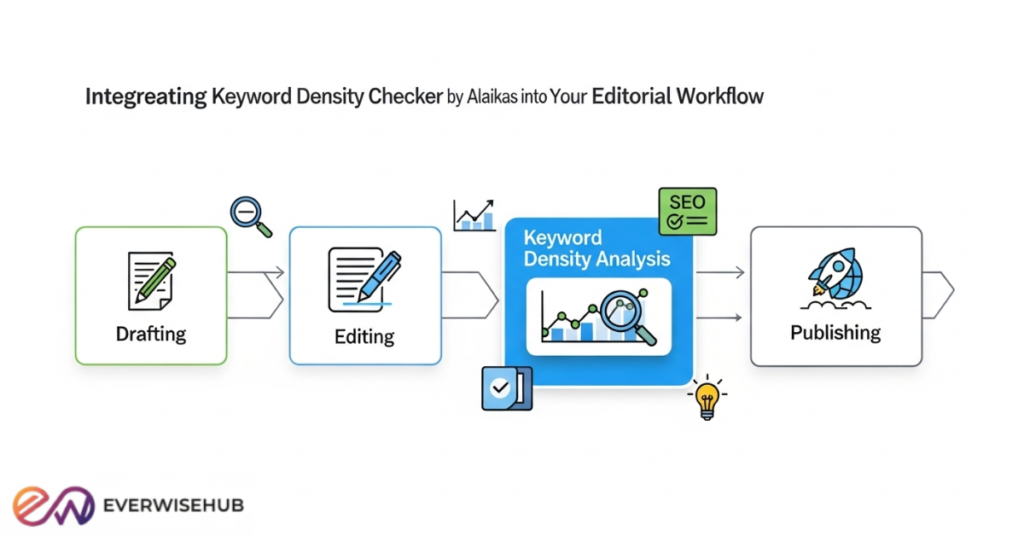
Professional content creation is rarely a one-step process. It involves drafting, editing, reviewing, and optimizing. The keyword density checker by Alaikas fits into this workflow as a checkpoint in the editing stage. After your initial draft is complete, run your content through the tool to assess keyword distribution.
At this stage, the goal is not to force more keywords into the text but to refine your content’s focus. The tool helps you identify where your primary keyword appears and what supporting terms exist. With these insights, you can determine whether your content maintains relevance without drifting off-topic.
Part of the editorial process includes reworking sentences to enhance clarity and context. When your content centers around a subject, such as the intriguing story of potthoff ehemann lisa maria potthoff scheidung, keywords become part of the narrative rather than forced inserts. Naturally occurring keywords contribute to depth and user engagement.
Ensuring a balanced keyword presence also aids readability. Content that unnaturally repeats the same term can frustrate readers and reduce the time they spend on the page. With keyword density checker by Alaikas, you can optimize for SEO while preserving the quality and flow of your writing.
Thoughtful editing also means considering synonyms and related phrases. Search engines understand context, and by using semantically linked terms, your content can cover a broader range of relevant queries. For example, various permutations of key topics might include phrases about relationship changes, shifts in personal dynamics, or public interest terms like the one mentioned above involving public figures. Incorporating this variety improves relevance without compromising specificity.
Why Keyword Density Is Still Relevant in SEO
Some may argue that keyword density is obsolete, but that’s not accurate. What has changed is how search engines interpret keywords. They increasingly focus on intent and context rather than mere repetition. Tools like the keyword density checker by Alaikas help strike a balance between technical optimization and natural readability.
In the era of semantic search, search engines no longer look at individual keywords in isolation. They analyze entire passages to understand the meaning behind the text. This makes it more important for writers to use keywords strategically and in harmony with related terms that strengthen the overall theme.
Keyword density remains relevant because it provides a quantitative measure that supports qualitative improvements. It helps writers avoid extremes — either neglecting important keywords or overusing them. By maintaining a keyword density of about one to one and a half percent for primary terms, content can signal relevance without resorting to spammy tactics.
Moreover, the keyword density checker by Alaikas helps writers track both primary and secondary keywords. This comprehensive view ensures that content encompasses a rich semantic field, enhancing the chances of ranking for multiple related queries.
Case Studies: How Keyword Density Checker by Alaikas Transforms Content
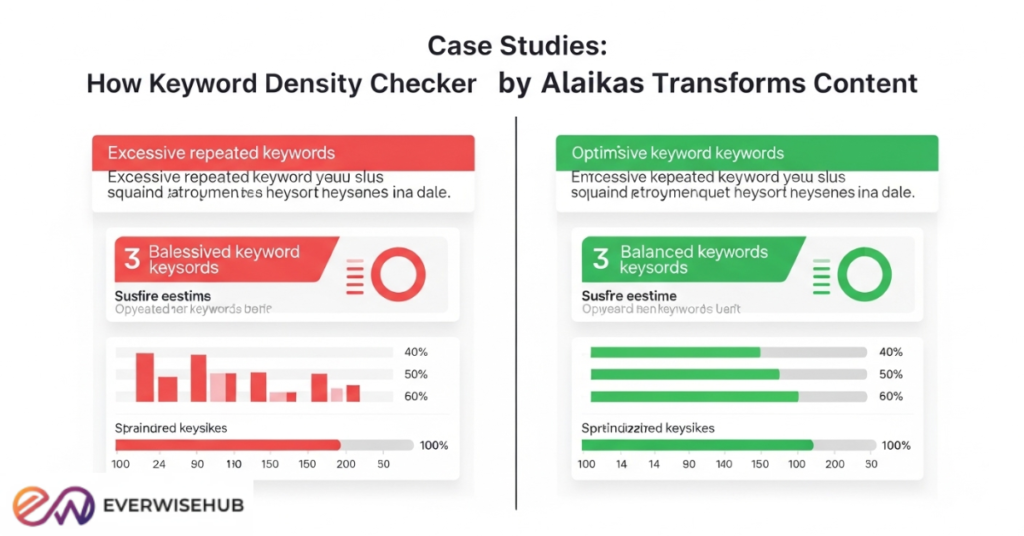
Consider a content creator working on an in-depth article about personal histories and public interest topics. They might begin with a strong narrative but lack an SEO focus. After running the text through the keyword density checker by Alaikas, they discover that essential terms are either missing or underrepresented. With this insight, the writer can revise sections to naturally introduce key phrases where contextually appropriate.
Another example involves content that initially overuses a keyword. The checker highlights excessive density, prompting the author to diversify their language. They replace repeated terms with synonyms, restructure sentences, and use related phrases to maintain focus without redundancy. As a result, the content becomes more engaging and linguistically richer.
Both scenarios demonstrate how the keyword density analysis informs editorial decisions. Rather than treating keywords as rigid constraints, the keyword density checker by Alaikas empowers writers to make informed choices that enhance both SEO value and reader experience.
Aligning Keyword Density with Quality Content Guidelines
Google’s Helpful Content Update emphasizes content created for people first, not search engines. This means that keyword placement must feel natural, helpful, and contextually relevant. Tools like the keyword density checker by Alaikas support this approach by revealing keyword patterns without promoting manipulation.
When you focus on providing valuable information, keywords naturally emerge in the text. For example, when discussing nuanced topics such as personal changes or public events, relevant terms appear where they make sense. The keyword density checker by Alaikas reinforces this by measuring presence without dictating insertion.
Quality content also benefits from clear explanations, narrative depth, and authentic voice. Using the tool as a guide rather than a rule enforcer ensures your writing remains human-centered. Readers are more likely to engage with content that feels coherent, thoughtful, and anchored in real insight — factors that align with search engine priorities.
In essence, keyword density is a compass, not a map. It provides direction but should not dictate every word. When your content satisfies readers’ needs, search success follows.
Advanced Tips for Optimizing with Keyword Density Checker by Alaikas
Beyond basic checks, the keyword density checker by Alaikas can support advanced strategies. For example, it can help evaluate keyword distribution across sections of long-form content. Breaking down the analysis by heading or paragraph groups can show whether your primary keyword appears in key structural elements like introductions and conclusions.
Another advanced approach involves comparing keyword density across competing articles. By analyzing high-ranking content, you can identify patterns in keyword usage and ensure your own content aligns with industry norms without copying.
The tool also encourages writers to think about semantic fields. Rather than fixating on a single phrase, you can target a cluster of related terms that enhance thematic relevance. This supports richer content that appeals to both search engines and users.
Integrating Keyword Density Insights into Content Planning
Keyword density insights can inform your editorial calendar and topic planning. By identifying which keywords perform well and where gaps exist, you can prioritize new content that fills those needs. The keyword density checker by Alaikas helps you understand the landscape of terms related to your niche, guiding future topics and keyword strategies.
When planning content series or topic clusters, knowing how keywords operate within texts can help maintain coherence across pieces. Each article can support a central theme while exploring different related terms, strengthening your overall site authority on the subject.
Measuring Success After Optimization
Once you’ve used the keyword density checker by Alaikas to optimize your content, the next step is measuring impact. Monitor your search rankings, organic traffic, and engagement metrics. Effective keyword optimization should lead to improvements in visibility and user engagement over time. Adjust your strategies based on performance data, continuing to refine your content with keyword insights in mind.
Conclusion
The keyword density checker by Alaikas is more than a simple tool — it’s a strategic ally in your SEO efforts. It helps you balance keyword presence with quality writing, ensuring that your content resonates with both users and search engines. By using it thoughtfully, you can refine your content’s focus, enhance relevance, and improve search performance without compromising readability. In the evolving landscape of SEO, tools that support clarity, relevance, and user-first content will always be valuable.
Keyword optimization isn’t about chasing algorithms; it’s about making your content more understandable, engaging, and useful. The keyword density checker by Alaikas helps you achieve that by offering clear insights that support quality writing — a goal that benefits both your readers and your search visibility.
FAQs
What is the keyword density checker by Alaikas?
The keyword density checker by Alaikas is an SEO tool that analyzes how often specific keywords appear in your content and calculates their percentage based on total word count.
What is the ideal keyword density for SEO?
The ideal keyword density is typically between 1% and 1.5%, but content should always feel natural and user-friendly rather than overly optimized.
Can keyword stuffing harm my rankings?
Yes, overusing keywords can lead to penalties from search engines, as it makes content look spammy and reduces readability.
How does the keyword density checker by Alaikas help writers?
It helps writers balance keyword usage, improve content clarity, and ensure SEO optimization without compromising readability.
Should I use related keywords along with my main keyword?
Yes, using related or LSI keywords improves context, helps search engines understand your content better, and increases your chances of ranking for multiple queries.