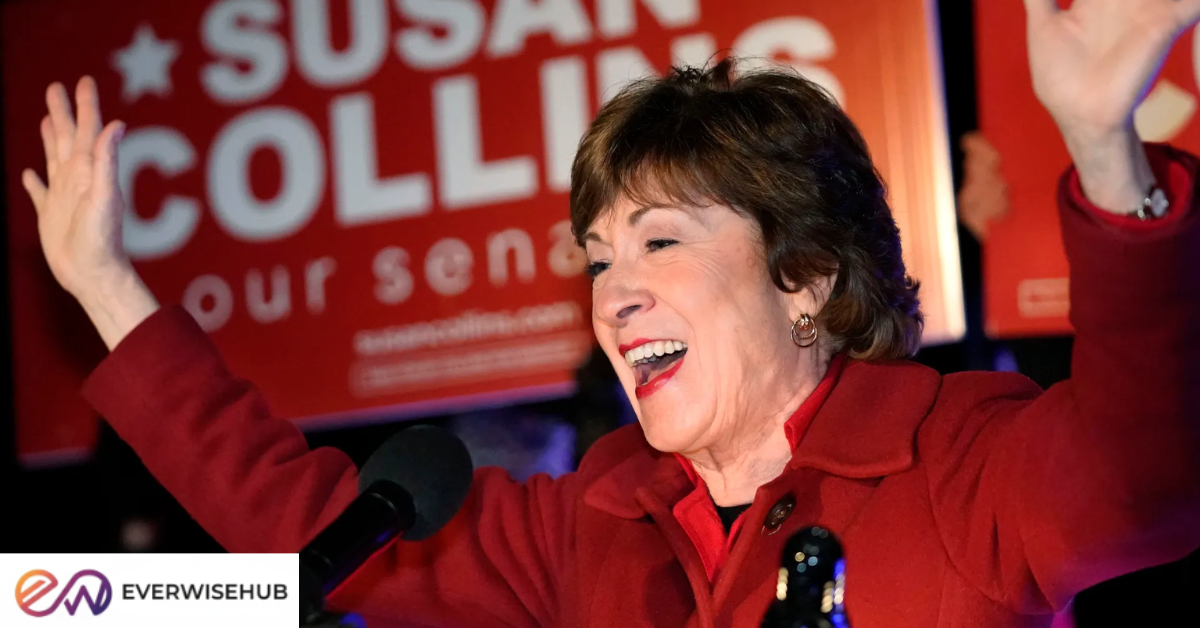
Introduction: Why Susan Collins Maine Still Matters
Few political figures spark as much discussion, admiration, and debate as Susan Collins Maine. In an era when politics often feels loud, rushed, and deeply polarized, Collins represents something increasingly rare: longevity built on moderation, patience, and a willingness to walk the uncomfortable middle ground.
For decades, she has been a fixture in Washington, yet her political identity is inseparable from her home state. Maine voters don’t just elect Susan Collins; they trust her. That trust didn’t happen overnight. It was earned over years of votes, compromises, and controversial moments that shaped her reputation as one of the most influential U.S. Senators of her generation.
This article takes a deep, honest look at Susan Collins Maine, exploring her background, career milestones, legislative philosophy, controversies, and lasting Senate legacy — without slogans, hype, or spin.
Who Is Susan Collins? A Brief Overview
Before diving into policy and power, it’s important to understand the person behind the name. Susan Collins didn’t rise through celebrity politics or viral moments. Her journey was quieter, steadier, and deeply rooted in public service.
BIO Snapshot
| Detail | Information |
|---|---|
| Full Name | Susan Margaret Collins |
| Date of Birth | December 7, 1952 |
| Age | 73 (as of 2026) |
| Profession | Politician, U.S. Senator |
| Nationality | American |
| Net Worth (approx.) | $3–5 million |
| Notable Works / Achievements | Longest-serving U.S. Senator from Maine, bipartisan legislation, senior Senate leadership roles |
From this foundation, Susan Collins Maine built one of the longest and most distinctive Senate careers in modern American politics.
Early Life and Maine Roots
Susan Collins was born and raised in Caribou, a small town in northern Maine. This detail is more than biographical trivia. Maine’s rural culture, close-knit communities, and independent mindset deeply influenced her worldview.
Her parents were active in local politics, exposing her early to civic duty, town halls, and grassroots democracy. Unlike politicians shaped by Washington think tanks, Collins learned politics where neighbors knew each other’s names and disagreements still ended in handshakes.
She attended St. Lawrence University, later completing graduate work in government. By the time she entered public service, she already understood something many politicians struggle to grasp: voters want results more than rhetoric.
Entering Politics: From State Roles to the U.S. Senate

Before becoming a national figure, Susan Collins Maine built experience at the state and federal level.
Her early career included:
- Staff roles for Maine congressional leaders
- Service in the Maine state government
- Work within federal agencies
These behind-the-scenes roles gave her technical knowledge of governance, budgeting, and policy mechanics. When she ran for the U.S. Senate in 1996, she wasn’t an outsider promising disruption. She was a seasoned public servant offering stability.
She won — and kept winning.
Susan Collins Maine and Her Senate Longevity
Longevity in politics isn’t accidental. Voters don’t re-elect someone repeatedly unless they feel represented.
Susan Collins Maine has won multiple Senate terms by cultivating:
- A reputation for independence
- A focus on constituent services
- Strong communication with Maine voters
- A moderate voting record
She often outperformed her party in statewide elections, even as national politics grew more divisive. While many Republican senators struggled in blue-leaning states, Collins maintained support across party lines.
That alone makes her Senate career worth studying.
A Reputation for Bipartisanship
Perhaps the defining feature of Susan Collins Maine is her bipartisan approach.
She frequently worked with Democratic colleagues on:
- Healthcare reform
- Infrastructure funding
- Government oversight
- National security legislation
In a Senate increasingly shaped by party loyalty, Collins often prioritized policy outcomes over ideological purity. Supporters praise this as courage. Critics call it political caution. The truth likely lies somewhere in between.
Still, her bipartisan work strengthened her credibility as a lawmaker focused on governance rather than headlines.
Key Legislative Contributions
Over the years, Susan Collins Maine played central roles in numerous legislative efforts. Some highlights include:
- Advocacy for rural healthcare access
- Support for military families and veterans
- Infrastructure investment for Maine communities
- Oversight of government spending and accountability
Her committee work, especially in appropriations and homeland security, placed her at the center of budgetary and national safety decisions. These roles gave her influence beyond simple vote counts.
Unlike flashier senators, Collins often shaped legislation quietly, through negotiation rather than speeches.
The Power and Limits of Moderation
Moderation has been both Collins’ strength and her greatest challenge.
In earlier decades, centrist senators were common. Over time, the political center narrowed. For Susan Collins Maine, this meant navigating intense pressure from both sides.
Supporters argue:
- Moderation keeps democracy functional
- Compromise leads to durable policy
- Independent thinking reflects Maine values
Critics counter:
- Moderation enables stronger party agendas
- Bipartisanship sometimes delays reform
- Compromise can dilute accountability
These debates followed Collins throughout her career and defined much of her public image.
High-Profile Votes and Controversies
No long Senate career is controversy-free. Susan Collins Maine faced national scrutiny during several high-profile votes.
Some decisions drew praise for independence. Others sparked protests and backlash. In each case, Collins defended her reasoning, often emphasizing constitutional interpretation, precedent, or institutional stability.
Whether one agrees with her votes or not, her approach remained consistent: careful deliberation over political theater.
This consistency, even when unpopular, reinforced her image as a principled legislator rather than a reactive one.
Relationship with Maine Voters
What truly sets Susan Collins Maine apart is her enduring relationship with voters back home.
Maine residents often describe her as:
- Accessible
- Responsive to local concerns
- Willing to listen
- Focused on practical outcomes
She invested heavily in constituent services, responding to letters, hosting town halls, and addressing state-specific issues. This local engagement helped her survive political storms that ended other Senate careers.
In Maine politics, personality still matters — and Collins understood that early.
Susan Collins Maine in the Changing Senate
As the Senate evolved, so did Collins’ role.
She became:
- One of the most senior women in the chamber
- A mentor to newer lawmakers
- A bridge between ideological camps
Her institutional knowledge gave her quiet authority. When she spoke, colleagues listened — not because she was loud, but because she had seen political cycles come and go.
In many ways, her career reflects an older model of Senate leadership built on relationships rather than performance.
Media Perception vs. Reality
National media often struggled to categorize Susan Collins Maine.
Some portrayed her as:
- A swing vote
- A political enabler
- A symbol of moderation
Others emphasized her independence and long record of public service. The truth is more nuanced than headlines allow.
Collins rarely fit simple narratives. She voted with her party often, but not always. She resisted labels, preferring case-by-case analysis. That refusal to conform frustrated pundits but appealed to voters who value judgment over ideology.
Legacy: How History May Remember Susan Collins Maine
Political legacies aren’t written in real time. They form slowly, shaped by long-term impact rather than daily news cycles.
Susan Collins Maine will likely be remembered for:
- Longevity rooted in voter trust
- A consistent moderate philosophy
- Commitment to institutional stability
- Influence earned through experience
Future historians may debate specific votes, but few will question her role as one of Maine’s most significant political figures.
Her career stands as a case study in how persistence, pragmatism, and restraint can still shape American politics.
Why Susan Collins Maine Still Shapes the Conversation
Even after decades in office, Susan Collins Maine remains relevant because she represents a political path many believe is disappearing.
In a system driven by extremes, her career raises important questions:
- Is compromise still possible?
- Can moderation survive polarization?
- Does experience still matter?
Whether one sees her as a bridge-builder or a cautious centrist, her influence is undeniable.
Conclusion
Love her or criticize her, Susan Collins Maine carved out a Senate legacy that defies easy labels. She wasn’t the loudest voice in the room, but she was often one of the most consequential. Her career reflects the power of patience, the value of experience, and the enduring importance of trust between elected officials and voters.
As American politics continues to evolve, her story offers a reminder that not every legacy is built on spectacle. Some are built on consistency, credibility, and decades of showing up.
If you have thoughts on Susan Collins’ political legacy — whether supportive or critical — share your perspective. Political history is shaped not just by leaders, but by the conversations they inspire.