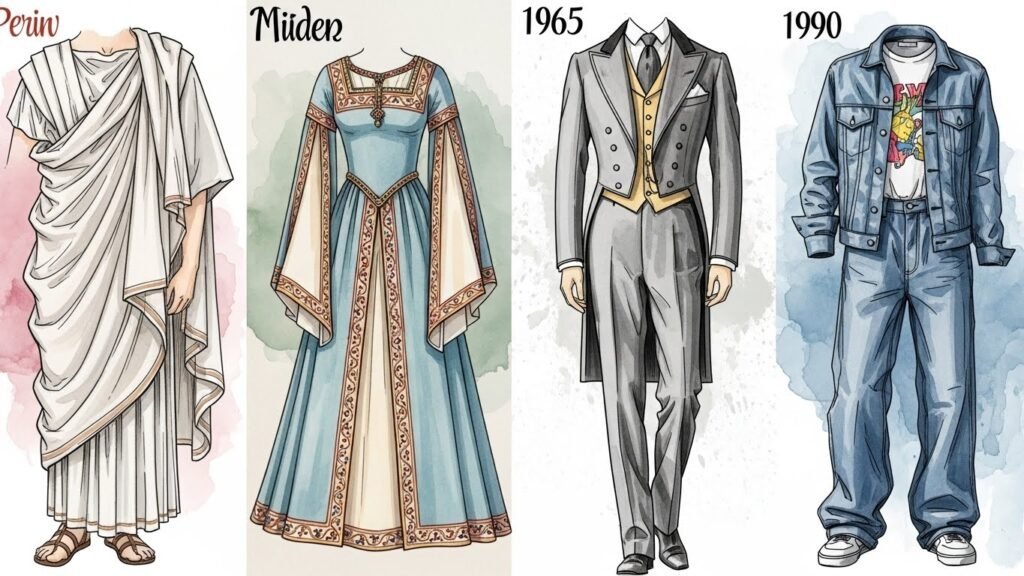
Fashion rarely appears out of nowhere. Every jacket cut, every dress silhouette, and even the jeans hanging in your wardrobe carry quiet echoes of the past. When you look closely, modern outfits are like living museums—stitched together from centuries of tradition, rebellion, culture, and creativity. That’s why understanding the history of Western fashion is more than a history lesson. It’s a way to understand ourselves, our choices, and how style continues to evolve.
From medieval robes to streetwear, Western fashion has always reflected society’s values, struggles, and dreams. In this article, we’ll explore how those historical shifts still influence what we wear today—and why fashion never truly forgets its roots.
Understanding the History of Western Fashion
The history of Western fashion spans hundreds of years, beginning in ancient Europe and evolving through dramatic cultural changes. Unlike many traditional dress systems that remained consistent for centuries, Western clothing changed rapidly. These changes were driven by politics, religion, technology, social class, and artistic movements.
Fashion became a language—one that spoke about wealth, gender roles, power, freedom, and identity.
Some key influences that shaped Western fashion include:
- Social hierarchy and class systems
- Industrialization and mass production
- Wars and political revolutions
- Art, music, and youth culture
- Technological innovation in textiles
Each era added new layers, and modern fashion is the result of all these overlapping stories.
Ancient Foundations That Still Matter
Greek and Roman Influence
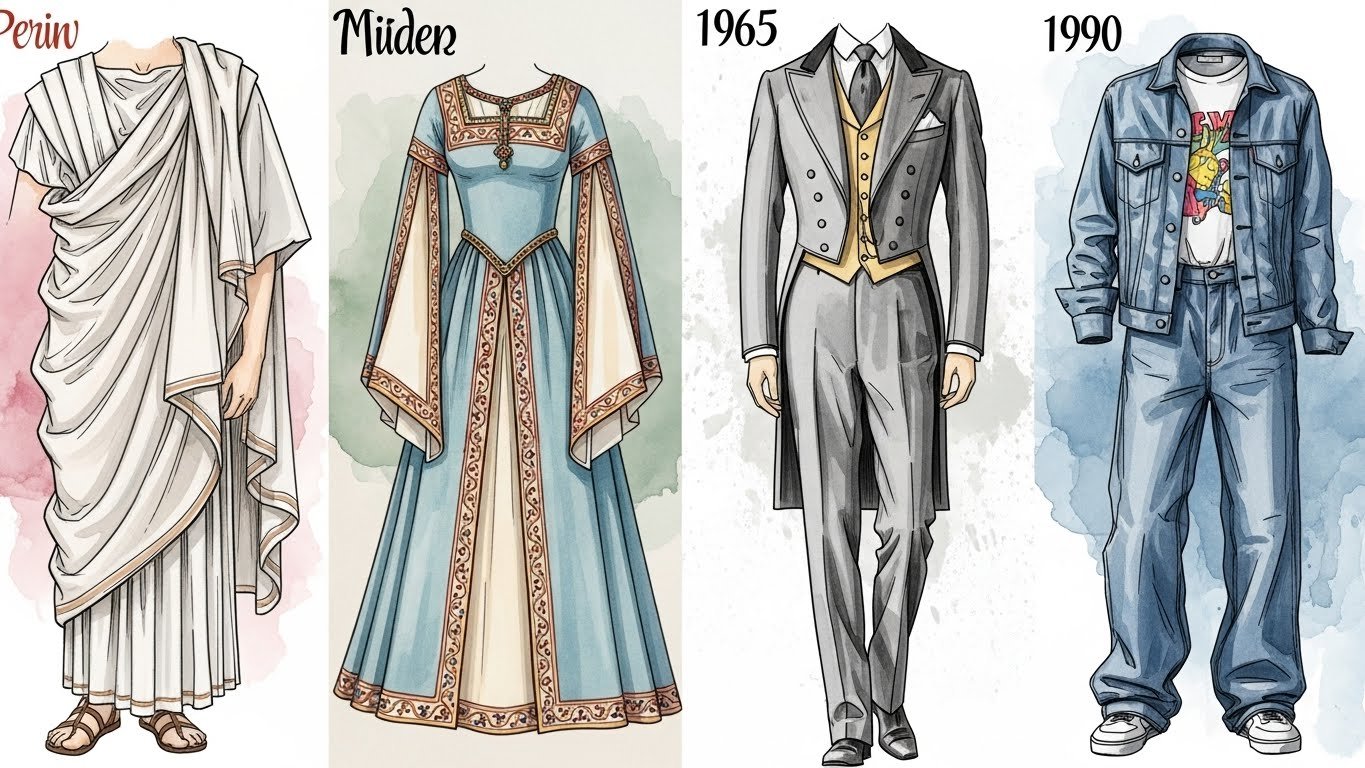
The roots of Western style can be traced back to ancient Greece and Rome. These civilizations valued balance, proportion, and simplicity—principles that still define modern fashion design.
Flowing tunics, draped garments, and natural fabrics emphasized the human form rather than hiding it. Today’s minimalist dresses, toga-inspired gowns, and structured draping owe a lot to this era.
Key elements that survived:
- Draped silhouettes
- Sandals and leather footwear
- Neutral color palettes
- Emphasis on tailoring around the body
The history of Western fashion shows us that even modern red carpet looks are often updated versions of ancient ideals.
Medieval Fashion and the Birth of Structure
During the Middle Ages, clothing became more complex and symbolic. Fashion began to reflect strict social classes. What you wore clearly showed your rank.
This era introduced:
- Corsetry and fitted bodices
- Long gowns and layered clothing
- Rich fabrics like velvet and brocade
- Decorative embroidery
Although medieval fashion was restrictive, it laid the foundation for structured garments. Modern blazers, coats, and formalwear still rely on tailoring techniques developed during this time.
The Renaissance: Fashion as Art
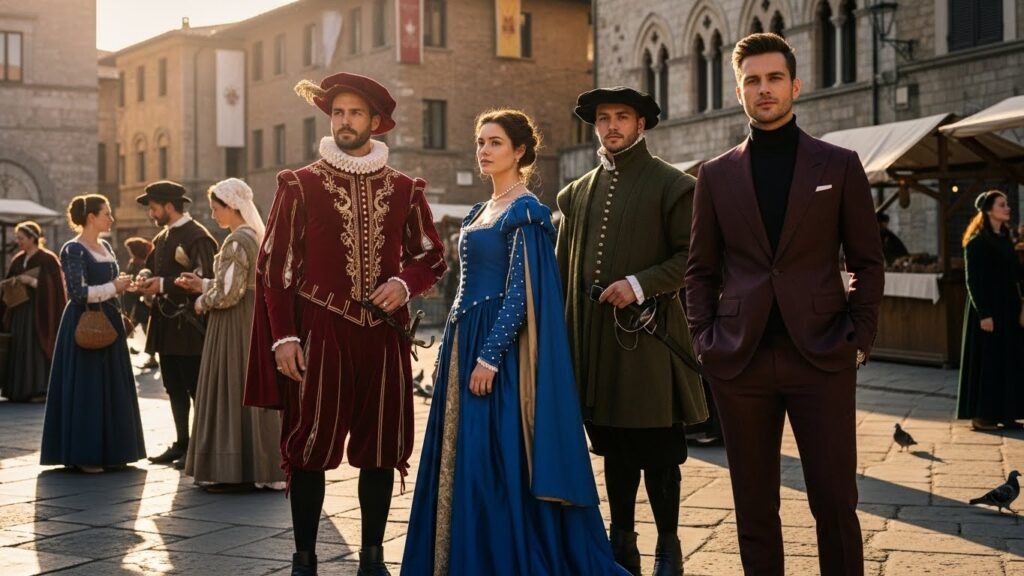
The Renaissance marked a turning point in the history of Western fashion. Clothing became expressive, luxurious, and artistic. Tailoring improved, and fashion became a way to display personal identity.
Designers emphasized:
- Detailed craftsmanship
- Bold colors and patterns
- Puff sleeves and ornate collars
- Fine fabrics like silk and satin
Today’s luxury fashion houses borrow heavily from Renaissance aesthetics, especially in couture collections and runway drama.
The 18th Century: Excess, Elegance, and Rebellion
This period brought extremes. On one hand, aristocratic fashion was extravagant. On the other, social unrest pushed toward simplicity.
Key Contributions
- Powdered wigs and elaborate gowns
- Waistcoats and tailored menswear
- Early fashion magazines
- Fashion as political expression
After the French Revolution, simplicity replaced excess. This shift directly influenced modern minimalism and practical dressing.
The Industrial Revolution Changed Everything
No era transformed fashion more than industrialization. The history of Western fashion took a sharp turn as machines replaced handwork.
Mass production made clothing:
- Affordable
- Accessible
- Faster to produce
Ready-to-wear fashion emerged, setting the stage for modern retail. Standard sizing, sewing machines, and textile factories reshaped wardrobes forever.
Modern fast fashion, seasonal trends, and global clothing brands all trace back to this period.
Victorian Fashion and Gender Norms
Victorian-era clothing reflected strict moral values. Women’s fashion emphasized modesty, while men’s fashion focused on authority and professionalism.
Influences still visible today:
- Tailored suits
- Long coats and structured dresses
- Formal wear traditions
- Black as a symbol of elegance
Even modern business attire owes much to Victorian menswear traditions.
The 20th Century: Fashion Finds Its Voice
The 1900s marked rapid change in the history of Western fashion. Each decade introduced bold shifts driven by war, youth culture, and social change.
1920s: Freedom and Flappers
- Shorter hemlines
- Loose silhouettes
- Jazz-age glamour
1950s: Structure and Femininity
- Cinched waists
- Full skirts
- Classic tailoring
1960s–70s: Rebellion and Individuality
- Mini skirts
- Bell-bottoms
- Psychedelic prints
1980s–90s: Power and Street Style
- Shoulder pads
- Denim culture
- Sportswear influence
These decades continue to inspire designers, influencers, and everyday outfits.
How the History of Western Fashion Shapes Modern Trends
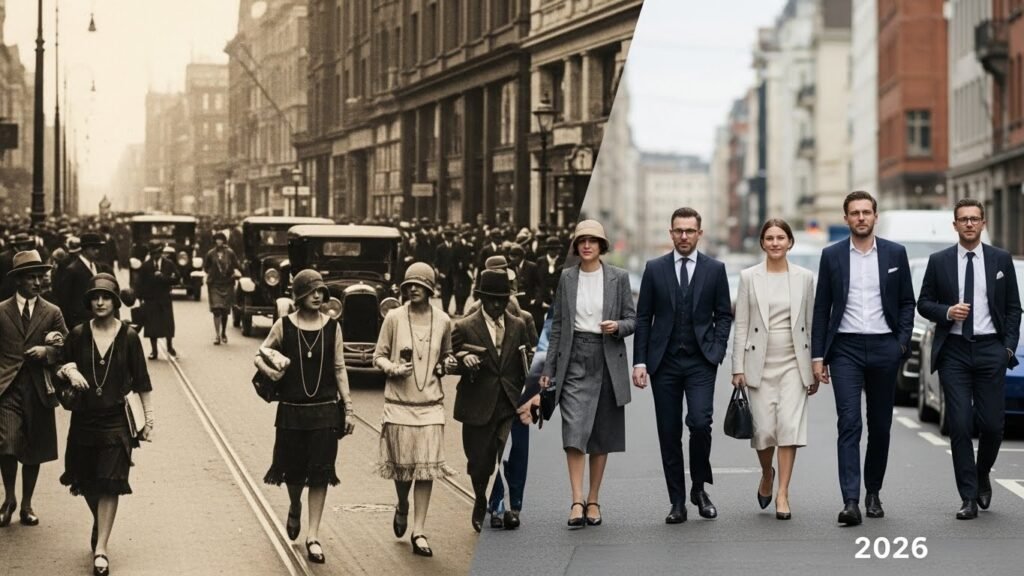
Modern fashion is not about copying the past—it’s about reinterpreting it. Designers constantly revisit historical silhouettes, fabrics, and ideas.
Visible Influences Today
- High-waisted jeans inspired by vintage styles
- Corset tops reimagined for casual wear
- Tailored suits returning in gender-neutral forms
- Bohemian fashion rooted in 1970s culture
The history of Western fashion gives designers a creative blueprint, while modern culture adds innovation.
Streetwear: A Modern Chapter of History
Streetwear might seem new, but it’s deeply connected to fashion history. It blends:
- Military uniforms
- Sportswear
- Workwear
- Youth subcultures
Hoodies, sneakers, and oversized silhouettes echo historical uniforms and labor clothing, proving that fashion evolution is cyclical.
Why Vintage Fashion Keeps Coming Back
One reason fashion feels repetitive is because trends recycle every 20–30 years. Vintage fashion taps into nostalgia while offering authenticity.
Popular revivals include:
- 90s denim
- 70s flared pants
- 80s oversized blazers
- Y2K aesthetics
This recycling keeps the history of Western fashion alive in everyday wardrobes.
Sustainability and the Return to Craft
Interestingly, modern sustainability movements echo pre-industrial fashion values. Slow fashion, ethical production, and handmade clothing reflect older traditions when clothes were meant to last.
This shift highlights:
- Quality over quantity
- Timeless design
- Respect for materials
In many ways, the future of fashion looks back to its past.
Fashion as Identity and Expression
Throughout the history of Western fashion, clothing has always been personal. Today, fashion is more inclusive, diverse, and expressive than ever.
People use style to show:
- Cultural identity
- Gender expression
- Personal beliefs
- Creativity
This freedom exists because past generations challenged norms through clothing.
Key Elements Passed Down Through Western Fashion History
Here’s a quick look at how historical elements appear in modern style:
| Historical Era | Key Feature | Modern Equivalent |
|---|---|---|
| Ancient Greece | Draped garments | Evening gowns |
| Medieval Era | Layering | Winter fashion |
| Renaissance | Decorative detail | Couture design |
| Victorian Era | Tailoring | Business suits |
| 20th Century | Casual wear | Everyday fashion |
Why Understanding Fashion History Matters
Knowing the history of Western fashion helps you:
- Build a timeless wardrobe
- Understand trends better
- Make informed style choices
- Appreciate craftsmanship
Fashion becomes more meaningful when you know where it comes from.
Conclusion: The Past Wears the Future
Fashion is a conversation across centuries. Every outfit we wear today is shaped by artists, workers, rebels, and visionaries who came before us. The history of Western fashion doesn’t just influence runways—it lives in our closets, our culture, and our confidence.
As trends continue to change, one thing remains clear: style never moves forward without looking back. By understanding fashion’s past, we become more thoughtful, expressive, and intentional in how we dress today.
If you enjoyed this deep dive, share your thoughts in the comments or pass this article along to someone who loves fashion as much as you do.