
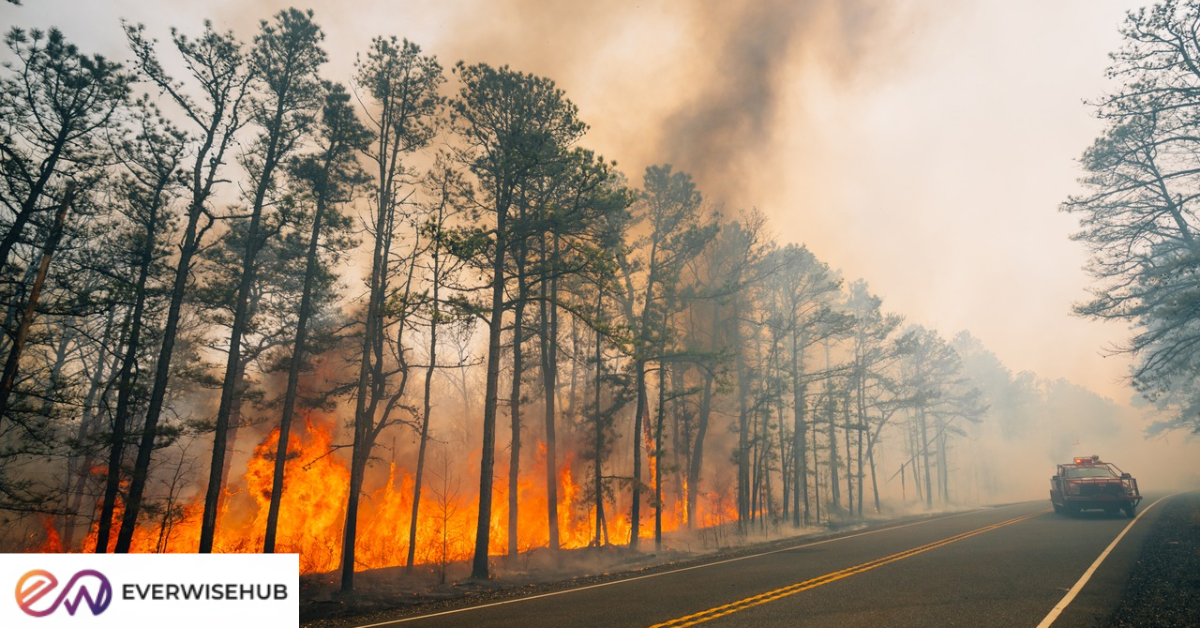
Wildfires can strike with little warning, leaving communities in New Jersey scrambling for safety. While the state may not have the same wildfire frequency as California or Australia, climate changes and dry conditions are making NJ wildfire events more frequent and dangerous. Residents often underestimate the risk, assuming “it can’t happen here,” but the reality is stark: preparation saves lives. In this article, we’ll explore practical safety tips, emergency strategies, and preventive measures to help you navigate NJ wildfire threats effectively.
Understanding the NJ Wildfire Risk
Even though New Jersey is known for its coastal areas, forests, and wetlands, wildfires are increasingly a concern. Factors contributing to NJ wildfire risks include:
- Dry Summer Conditions: Extended periods without rain dry out vegetation, making it more flammable.
- Strong Winds: Winds can spread flames rapidly across forests and neighborhoods.
- Human Activity: Campfires, discarded cigarettes, and fireworks are common causes of local fires.
- Climate Change: Rising temperatures and fluctuating rainfall increase fire frequency.
According to fire experts, small wildfires in New Jersey’s pine barrens and forested areas can grow surprisingly fast. Being aware of the environment around you is the first step in ensuring safety.
Recognizing Early Signs of a NJ Wildfire
Being able to identify a wildfire early can make the difference between evacuation and disaster. Watch for:
- Thick, dark smoke or unusual odors
- Strong smell of burning vegetation
- Sudden animal migrations, as wildlife flees the area
- Heat waves or sudden sparks near wooded areas
Moreover, local authorities often issue alerts through mobile notifications, radio, or emergency apps. Sign up for these alerts to stay ahead.
NJ Wildfire Safety Tips for Residents
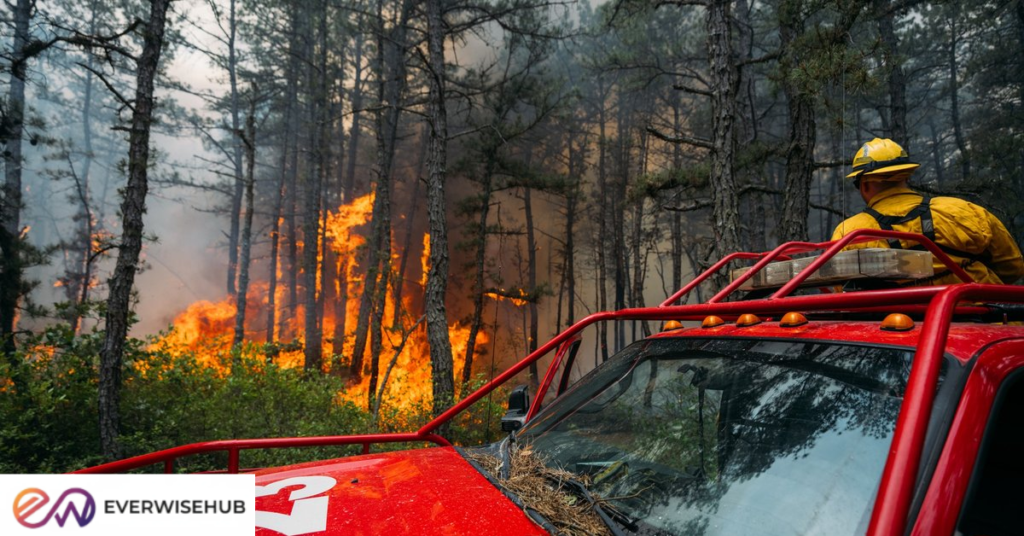
Safety during a NJ wildfire requires preparation, awareness, and quick decision-making. Here’s a practical guide for residents:
1. Prepare a Wildfire Emergency Kit
An emergency kit should include:
- Water (at least one gallon per person per day for 3 days)
- Non-perishable food
- Flashlights and extra batteries
- First aid supplies
- Important documents (ID, insurance, medical records)
- N95 masks to protect from smoke inhalation
- Fire extinguisher and fire-resistant blankets
Having a kit ready ensures you can evacuate quickly without scrambling for essentials.
2. Develop a Family Evacuation Plan
Discuss evacuation routes with your family and practice drills regularly. Ensure everyone knows:
- Multiple exit routes from your neighborhood
- Safe meeting points outside the danger zone
- Communication plans if cell service fails
In addition, consider neighbors with special needs or pets, as they may require extra help during an emergency.
3. Maintain Fire-Resistant Landscaping
Creating defensible space around your home is crucial. Tips include:
- Trim trees and shrubs away from your home
- Remove dead leaves, pine needles, and other dry debris
- Use fire-resistant plants and mulch
- Maintain a 30-foot “safety zone” around structures
Research shows that homes with well-maintained defensible space are far less likely to ignite during a wildfire.
4. Monitor Weather and Fire Alerts
Wildfire conditions can change rapidly. Stay informed by:
- Checking local weather forecasts for high-risk days
- Following NJ Fire & Forestry Department updates
- Using wildfire alert apps like FEMA or Red Cross
Real-time information allows you to act promptly, reducing risks significantly.
5. During a Wildfire: Safety First
If a wildfire is approaching, take the following actions:
- Evacuate immediately if instructed
- Close all windows, doors, and vents to prevent smoke infiltration
- Move flammable items (furniture, firewood) away from the home
- Stay low to avoid smoke inhalation if trapped
Remember, your life is more valuable than property. Material items can be replaced; lives cannot.
NJ Wildfire Prevention Strategies
Prevention is always better than reaction. Here’s how communities can reduce NJ wildfire risks:
- Enforce fire bans during dry periods
- Educate residents on fire safety and safe campfire practices
- Clear public lands of excessive dry vegetation
- Encourage responsible disposal of cigarettes and fireworks
Individual responsibility plays a big role. A single spark can ignite a devastating fire if precautions are ignored.
How Wildfires Impact NJ Communities
Wildfires don’t just burn trees—they affect lives, economies, and health. Impacts include:
- Health: Smoke inhalation can trigger respiratory issues, especially in children and the elderly.
- Property Damage: Homes, vehicles, and public infrastructure can be destroyed.
- Economic Loss: Tourism, local businesses, and forestry industries can suffer significantly.
- Psychological Effects: Anxiety, trauma, and displacement affect residents long after the fire is extinguished.
Awareness of these consequences reinforces the importance of preparedness.
NJ Wildfire Evacuation: What You Need to Know
Evacuating during a wildfire can be chaotic without preparation. Here are key tips:
- Follow Official Orders: Do not wait until flames are near; early evacuation is safer.
- Pack Smart: Include medications, personal items, and pet supplies.
- Plan Your Route: Avoid congested highways; know alternate paths.
- Stay Informed: Keep a battery-powered radio handy for updates.
Moreover, avoid returning home until authorities confirm the area is safe. Secondary fires or embers can reignite even after initial containment.
Common NJ Wildfire Myths
Misinformation can be dangerous. Let’s bust a few common myths:
- Myth 1: Wildfires only happen in rural areas.
Fact: Suburban and even urban fringes can be affected. - Myth 2: Small fires aren’t dangerous.
Fact: Even a minor fire can spread rapidly under the right conditions. - Myth 3: Firefighters can save every home.
Fact: Resources are limited; personal preparedness is essential.
Believing in myths can delay crucial decisions, putting lives at risk.
Technology and NJ Wildfire Management
Technology plays a vital role in wildfire management:
- Drones and Satellites: Provide real-time fire mapping and monitoring.
- Early Warning Apps: Alerts residents of wildfire risk zones.
- Fire-Resistant Building Materials: Homes built with modern materials are more resilient.
Communities embracing technology are better positioned to respond and recover from NJ wildfire events.
Table: Quick Safety Checklist for NJ Wildfire
| Task | Priority | Notes |
|---|---|---|
| Prepare emergency kit | High | Include food, water, first aid, and important docs |
| Develop evacuation plan | High | Practice routes and meeting points |
| Maintain defensible space | Medium | Trim trees, remove dry leaves, use fire-resistant plants |
| Monitor weather & alerts | High | Check local fire alerts daily |
| Follow official evacuation orders | Critical | Leave immediately when instructed |
This table simplifies planning, making safety actionable for every household.
How to Protect Pets and Livestock
Pets and livestock are vulnerable during wildfires. Recommendations:
- Keep carriers, leashes, and food ready for pets
- Plan livestock evacuation routes in advance
- Identify temporary shelters for animals in safe zones
In addition, never leave pets behind; smoke and flames can be fatal within minutes.
Community Role in NJ Wildfire Safety
Individual efforts matter, but community collaboration is key:
- Neighborhood watch programs for fire monitoring
- Volunteer firefighting support or training
- Sharing wildfire preparedness knowledge with neighbors
Communities that work together can reduce fire spread and ensure more lives are saved.
Conclusion
NJ wildfire threats are real, unpredictable, and potentially devastating. However, proactive safety measures, preparedness, and informed decision-making can make all the difference. From emergency kits and evacuation plans to fire-resistant landscaping and community cooperation, every step counts. Don’t wait for a fire to strike—prepare today. Share these tips with family, neighbors, and friends to ensure everyone is ready, because awareness and action save lives.