Imagine standing at the roof of the world, where the air is so thin it steals your breath, and every step feels like a battle against nature itself. That’s the brutal reality of Mount Everest, a place that draws dreamers and daredevils from across the globe. But among the countless stories of triumph and heartbreak on this unforgiving mountain, one stands out like a frozen whisper in the wind—the tale of Francys Arsentiev, forever known as Sleeping Beauty Everest. Her journey wasn’t just about reaching the summit; it was a mix of love, ambition, and the harsh reminder that Everest doesn’t forgive mistakes. I’ve always been fascinated by these high-altitude epics, the kind that make you question what drives people to risk everything for a view from the top. In this article, we’ll dive deep into her life, her fateful climb, and why her memory lingers on the slopes like a ghost. If you’ve ever wondered about the human cost of chasing glory, stick around—this story will chill you to the bone.
Who Was Francys Arsentiev? The Woman Behind Sleeping Beauty Everest
Francys Arsentiev wasn’t your average adventurer. She was a force of nature, someone who traded a stable life for the thrill of scaling peaks that most of us only see in documentaries. Born in the sunny shores of Hawaii, she grew up with the ocean at her feet, but her heart was always pulling her toward the mountains. It’s funny how life works that way—sometimes the call of the wild comes from the most unexpected places. Francys discovered her passion for climbing early on, and it became more than a hobby; it was her identity. She tackled challenging routes across the world, building a reputation as a skilled mountaineer who pushed boundaries.
What really set her apart was her determination to climb without relying on supplemental oxygen, a feat that’s as rare as it is dangerous. In the climbing community, she’s remembered not just for her achievements but for the love story intertwined with her pursuits. She met her husband, Sergei Arsentiev, a renowned Russian climber, and together they formed a partnership that blended romance and adventure. Sergei, nicknamed the “Snow Leopard” for his prowess, shared her dreams, and they often climbed as a team. Their bond added a layer of poignancy to the Sleeping Beauty Everest narrative, turning a personal tragedy into something that resonates with anyone who’s ever loved deeply.
To give you a clearer picture of this remarkable woman, here’s a quick bio overview in table form. It’s based on what we know from her life and legacy, highlighting the key details that shaped her path.
| Aspect | Details |
|---|---|
| Full Name | Francys Arsentiev (née Yarbro) |
| Date of Birth | January 18, 1958 |
| Age | 40 (at the time of her death in 1998) |
| Profession | Mountaineer, Accountant |
| Nationality | American |
| Net Worth (approx.) | $200,000 – $500,000 (estimated from her career and expeditions) |
| Notable Works / Achievements | First American woman to summit Mount Everest without supplemental oxygen; Summited and skied down Mount Elbrus’s east and west peaks; Climbed numerous high-altitude mountains including Annapurna |
This table scratches the surface, but it shows how Francys wasn’t just Sleeping Beauty Everest—she was a trailblazer. Her net worth is a rough estimate, considering her work as an accountant in Colorado and the costs of her expeditions, but climbing isn’t exactly a lucrative field unless you’re sponsored big-time. Anyway, her real wealth was in her experiences, the kind money can’t buy.
The Dream That Led to Everest: Ambition Without Limits
Every great story has a spark, and for Francys, it ignited long before she set foot on Everest. Growing up in Honolulu, she attended prestigious schools like The American School in Switzerland and later earned degrees from the University of Louisville and the International School of Business Management. Sounds fancy, right? But beneath that educated exterior was a restless spirit craving heights. She started as an accountant in Telluride, Colorado—a ski town that probably fueled her love for the outdoors even more. It’s there she met Sergei, and their shared passion for mountaineering turned into a lifelong commitment.
By the 1990s, Francys had already notched impressive climbs. She became the first U.S. woman to ski down Mount Elbrus, Europe’s highest peak, conquering both its east and west summits. That alone would make most people hang up their crampons, but not her. She eyed Everest, the ultimate prize, with a twist: no bottled oxygen. Why? Her son Paul later reflected that she wanted to prove something to herself, to show that sheer willpower could overcome the death zone’s grip. The death zone, for those unfamiliar, is above 8,000 meters where oxygen levels plummet, leading to hypoxia, hallucinations, and worse. It’s a place where bodies shut down, and decisions blur.
Francys and Sergei trained rigorously, climbing peaks like Annapurna to prepare. They weren’t wealthy, so they skipped Sherpa support and oxygen tanks to cut costs—a risky choice that many experts warn against. In my opinion, that’s where the line between bravery and recklessness gets thin. Everest isn’t just a mountain; it’s a test of human limits, and going without oxygen amps up the danger exponentially. Yet, their dream was pure: to stand together on the summit as husband and wife, etching their names in history.
The 1998 Expedition: Triumph Turns to Tragedy
Spring 1998 marked the beginning of what would become the Sleeping Beauty Everest legend. Francys and Sergei arrived at Everest’s north side, via Tibet, opting for a less crowded route. They acclimatized, pushing through base camp and advanced camps, their sights set on the top. Without Sherpas, they carried their own gear, a grueling task that exhausted even the fittest climbers. Reports from fellow expeditions noted their determination; they were focused, almost obsessively so.
The Ascent: Reaching the Roof of the World
On May 22, after battling fierce winds and sub-zero temperatures, Francys summited. She radioed down, her voice crackling with joy: she’d done it. As the first American woman to reach Everest’s peak without supplemental oxygen, she shattered barriers. Sergei was right there with her, sharing the moment. Can you picture it? The panoramic views, the thin air buzzing with achievement. But summiting is only half the battle—getting down is where most fatalities occur.
They lingered too long at the top, perhaps savoring the victory. As dusk fell, fatigue set in. Hypoxia clouded their judgment, a common Everest killer. They descended slowly, but somewhere in the chaos of the north face, they separated. Sergei made it to their high camp, but Francys didn’t. Panic ensued. He grabbed oxygen and supplies, heading back up in the dark—a heroic but doomed effort.
The Tragic Descent: Last Moments on the Mountain
What happened next is pieced together from eyewitness accounts, painting a heartbreaking picture. Climbers from Uzbekistan found Francys collapsed near the First Step, a rocky outcrop at about 8,600 meters. She was alive but delirious, mumbling about her son and husband. “Don’t leave me,” she pleaded. They tried to help, giving her oxygen, but their own survival was at stake. In the death zone, tough choices define life and death. They left her, promising to return, but the mountain had other plans.
Meanwhile, Sergei searched frantically. He never returned. His body was found later, suggesting he fell while trying to reach her. Francys held on for days, her bright purple jacket and peaceful pose earning her the nickname Sleeping Beauty Everest. It’s eerie how she looked almost serene, leaning against a rock, as if just resting. Climbers passed her for years, a stark reminder of Everest’s toll. One team, including South African climber Cathy O’Dowd, attempted a rescue but couldn’t move her. O’Dowd later said it haunted her—the human instinct to help clashing with reality.
In 2007, British climber Ian Woodall led an effort to give her dignity, wrapping her body and moving it out of sight. It was a compassionate act, closing a chapter on the visible part of the Sleeping Beauty Everest saga.
Why Do They Call Her Sleeping Beauty Everest?
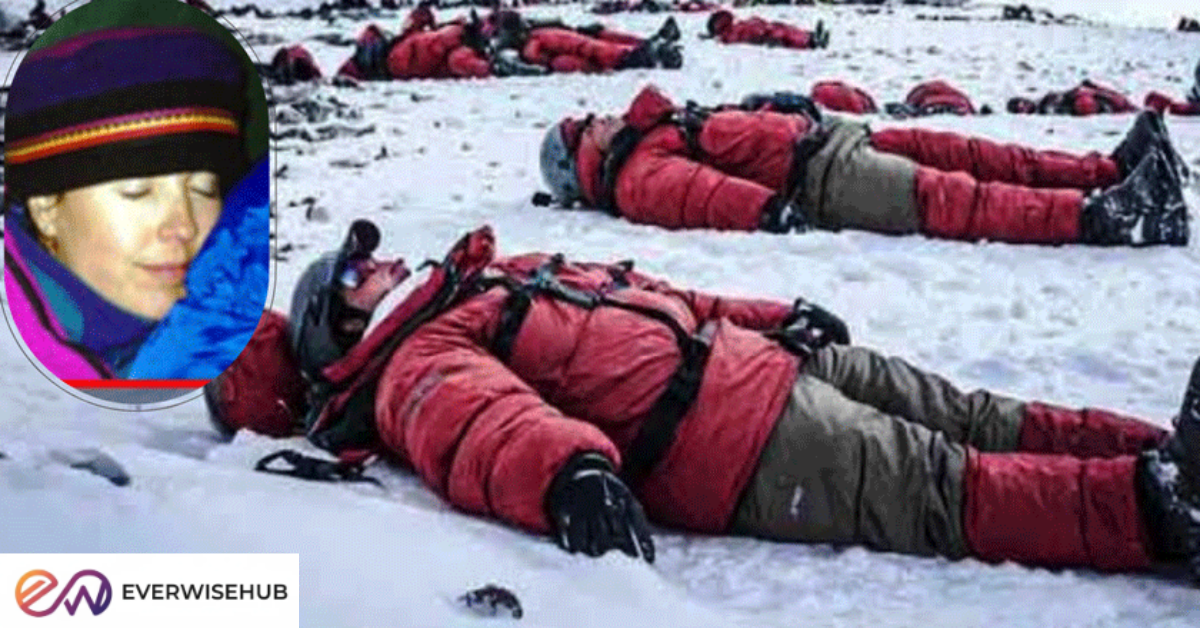
The moniker “Sleeping Beauty Everest” isn’t poetic license; it’s rooted in the grim visuals of her final resting place. Her body, preserved by the cold, appeared undisturbed—hair flowing, face calm, as if in slumber. In Rainbow Valley, Everest’s notorious graveyard of colorful jackets and gear, she stood out. Rainbow Valley isn’t a pretty name; it’s a macabre rainbow of frozen corpses, a consequence of the impossibility of body recovery at such altitudes.
This nickname spread through climber lore, blogs, and books. It’s a way to humanize the horror, turning a statistic into a story. But it also sparks debate: Is it respectful? Some say it romanticizes death, while others argue it honors her beauty and spirit. Personally, I think it’s a double-edged sword—it keeps her memory alive but overshadows her accomplishments. Francys was more than Sleeping Beauty Everest; she was a pioneer who inspired women in mountaineering.
Here are a few reasons the name stuck:
- Visual Impact: Her pose and preserved state made her look ethereal, not gruesome like some bodies.
- Location: Near the main route, thousands saw her, embedding the image in collective memory.
- Emotional Resonance: The love story with Sergei adds a fairy-tale tragedy, though far from happy endings.
- Media Spread: Articles and documentaries amplified it, making Sleeping Beauty Everest a search term phenomenon.
The Aftermath: Impact on Family and the Climbing World
Francys’s death rippled far beyond the Himalayas. Her son Paul, just 11 at the time, grappled with loss publicly. In interviews, he shared nightmares and regrets, like telling her not to go. It’s gut-wrenching—how do you process your mom becoming Sleeping Beauty Everest, a viral tale online? Paul has spoken about the pain of seeing photos, calling for respect toward the deceased.
The climbing community reflected too. Her story highlighted risks of climbing without oxygen or support. Expeditions now emphasize safety, with better gear and protocols. Yet, Everest’s death toll climbs, over 300 bodies still there. It’s a sobering fact: the mountain claims lives yearly, from avalanches to edema.
In terms of legacy, Francys paved the way for female climbers. Women like Melissa Arnot and Lhakpa Sherpa credit pioneers like her for breaking glass ceilings at high altitudes. Moreover, her tale fuels discussions on ethics—should bodies be left? Cleanup efforts, like those in 2019 removing tons of trash and remains, owe something to stories like Sleeping Beauty Everest.
Lessons from Sleeping Beauty Everest: What Climbers Should Know
If there’s wisdom in tragedy, it’s this: Everest demands respect. Francys’s story teaches us several hard truths. First, never underestimate the death zone. Oxygen deprivation causes cerebral edema, where your brain swells, leading to confusion. Sergei and Francys likely suffered this, explaining their separation.
Second, preparation is key. Skipping Sherpas saved money but cost lives. Today, guided tours with oxygen are standard, reducing risks. Third, know when to turn back. Summit fever—the drive to reach the top at all costs—kills. Better to live and try again.
For aspiring climbers, consider this bullet-point checklist inspired by her experience:
- Train extensively for high-altitude effects, including hypoxia simulations.
- Budget for support: Sherpas, oxygen, and weather forecasts aren’t luxuries.
- Build a team; solo or duo climbs amplify dangers.
- Monitor health: Frostbite and exhaustion sneak up fast.
- Have a backup plan, including rescue insurance.
In addition, remember the environmental toll. Everest’s overcrowding leads to more tragedies, so choose ethical operators.
A Haunting Legacy That Endures
Wrapping up the story of Sleeping Beauty Everest leaves me with mixed feelings. Francys Arsentiev was a woman of incredible grit, achieving what few dared without oxygen. Her love for Sergei added depth, making their end feel like a Shakespearean tragedy on ice. Yet, the mountain’s indifference reminds us of our fragility. Sleeping Beauty Everest isn’t just a nickname; it’s a symbol of dreams deferred and the price of ambition.