
Have you ever wondered how the roots of a family tree can branch out to influence an entire city’s future? That’s exactly the case with Zohran Mamdani, New York City’s dynamic mayor, whose story begins far from the skyscrapers of Manhattan. Born in the vibrant heart of Kampala, Uganda, Zohran’s path to power is deeply intertwined with the remarkable lives of his parents. Zohran Mamdani parents, Mira Nair and Mahmood Mamdani, aren’t just background figures; they’re trailblazers in their own rights, blending creativity, intellect, and resilience into a legacy that’s now playing out on one of the world’s biggest stages. In this article, we’ll dive into their world, exploring how their global journeys and passions have shaped not only their son but also the broader conversations around identity, politics, and culture.
It’s easy to see why Zohran Mamdani parents capture so much attention these days. With Zohran stepping into the spotlight as NYC’s first Muslim mayor and its youngest in over a century, people are curious about the family dynamics that fueled his rise. From artistic triumphs to scholarly debates, their story is one of migration, achievement, and unyielding drive. Let’s peel back the layers and get to know them better.
The Global Roots of the Mamdani Family
Zohran Mamdani parents hail from diverse corners of the world, creating a rich tapestry of cultural influences that Zohran has carried into his public life. Mira Nair, his mother, was born in India, while his father, Mahmood Mamdani, has deep ties to Uganda through his Indian-origin family. Their meeting in Uganda back in 1989 wasn’t just a chance encounter; it was a fusion of worlds that would eventually lead to Zohran’s birth in 1991. Imagine growing up in a household where dinner table talks bounce from colonial histories to cinematic storytelling – that’s the environment that molded Zohran.
This multicultural upbringing didn’t stop at borders. The family moved between Uganda, South Africa, and eventually New York City, exposing young Zohran to a variety of perspectives. In many ways, Zohran Mamdani parents instilled in him a sense of global citizenship. Mahmood’s academic work on African politics and Mira’s films exploring diaspora experiences likely sparked Zohran’s own interest in social justice. It’s no surprise that Zohran often credits his parents for his worldview; after all, their lives embody the immigrant hustle and intellectual curiosity that define so many success stories.
Moreover, the family’s journey reflects broader themes of displacement and belonging. Mahmood’s family, for instance, faced challenges as Indian migrants in East Africa during turbulent times, including political upheavals in the 1970s. These experiences undoubtedly influenced how Zohran Mamdani parents raised their son, emphasizing resilience and empathy. In today’s polarized world, their story serves as a reminder of how personal histories can inform public service.
Who Is Mira Nair? Zohran Mamdani’s Mother and Filmmaking Icon
When we talk about Zohran Mamdani parents, Mira Nair stands out as a force of nature in the film industry. Born on October 15, 1957, in Bhubaneswar, India, Mira grew up in a middle-class family that valued education and the arts. She studied sociology at Miranda House in Delhi before heading to Harvard University on a scholarship, where her passion for documentary filmmaking took root. It’s fascinating to think how her early documentaries on Indian society paved the way for her groundbreaking feature films.
Mira’s big break came with “Salaam Bombay!” in 1988, a raw and poignant look at street children in Mumbai. The film earned an Oscar nomination for Best Foreign Language Film, putting her on the map as a director who tackles tough social issues with heart and authenticity. From there, she directed hits like “Mississippi Masala” in 1991, which starred Denzel Washington and explored interracial romance against the backdrop of Ugandan-Indian exile. That’s actually how she met Mahmood – during research for the film in Uganda. Their love story adds a romantic layer to the Zohran Mamdani parents narrative, doesn’t it?
Over the years, Mira has built an impressive portfolio, including “Monsoon Wedding” (2001), which won the Golden Lion at the Venice Film Festival, and “The Namesake” (2006), based on Jhumpa Lahiri’s novel about immigrant life. Her work often weaves in themes of identity, family, and cultural clash, mirroring her own life. As Zohran Mamdani’s mother, Mira has been vocal about her pride in his political journey, often sharing moments from his campaigns on social media. In interviews, she’s described motherhood as her greatest role, blending it seamlessly with her career. It’s inspiring to see how she balances directing acclaimed projects while supporting her son’s activism.
Beyond films, Mira founded Mirabai Films and the Maisha Film Lab in Uganda, mentoring young African filmmakers. This commitment to nurturing talent shows her generous spirit, which has undoubtedly rubbed off on Zohran. When reflecting on Zohran Mamdani parents, Mira’s influence is clear in his advocacy for the arts and underrepresented communities in NYC politics.
Mira Nair’s Notable Achievements
- Oscar nomination for “Salaam Bombay!” (1988)
- Golden Lion for “Monsoon Wedding” (2001)
- Directed stars like Irrfan Khan, Kal Penn, and Reese Witherspoon
- Founded film labs to empower global storytellers
Her story isn’t just about awards; it’s about breaking barriers as a woman of color in Hollywood. In a male-dominated industry, Mira’s persistence offers lessons in perseverance that Zohran has applied to his own battles in politics.
Who Is Mahmood Mamdani? Zohran Mamdani’s Father and Academic Powerhouse
Shifting focus to the other half of Zohran Mamdani parents, Mahmood Mamdani emerges as a towering figure in academia. Born in 1946 in Mumbai, India, to parents from Tanganyika (now Tanzania), Mahmood grew up in Kampala, Uganda. His family navigated the complexities of being Indian in colonial and post-colonial Africa, experiences that shaped his scholarly focus on colonialism, citizenship, and political identity.
Mahmood studied at the University of Pittsburgh and earned his PhD from Harvard in 1974. His career took him to universities worldwide, including Makerere University in Uganda, the University of Dar es Salaam in Tanzania, and eventually Columbia University, where he’s a professor of anthropology, political science, and international affairs. Books like “Citizen and Subject” (1996) and “When Victims Become Killers” (2001) have become staples in discussions on African politics and genocide. His work challenges simplistic narratives, urging deeper understanding of historical contexts.
As Zohran Mamdani’s father, Mahmood has been a quiet but profound influence. Zohran has often mentioned how his dad’s teachings on justice and anti-colonialism inspired his democratic socialist views. In fact, during Zohran’s mayoral campaign, Mahmood spoke about the enormity of the role, praising his son’s innovative yet uncompromising drive. It’s touching to see this intellectual giant beam with pride over his son’s achievements.
Mahmood’s life also includes personal trials, like being rendered stateless twice due to Ugandan political turmoil. These hardships built his resilience, which he passed on to Zohran. Today, at Columbia, he continues to mentor students, much like Mira does with filmmakers. Together, Zohran Mamdani parents represent a blend of intellect and creativity that’s rare and powerful.
Key Contributions of Mahmood Mamdani
- Authored influential books on African colonialism and identity
- Directed the Makerere Institute of Social Research
- Received honors like the Lenin Peace Prize (though controversial in some circles)
- Advocates for decolonizing education globally
His scholarly rigor adds depth to the family legacy, showing how ideas can drive real-world change.
Zohran Mamdani: A Brief Bio
Since Zohran is the public figure at the center of this story, it’s worth highlighting his own journey. Born to such accomplished parents, he forged his path in politics while drawing from their wisdom. Here’s a quick bio in table form for easy reference:
| Attribute | Details |
|---|---|
| Full Name | Zohran Kwame Mamdani |
| Date of Birth | October 18, 1991 |
| Age | 34 (as of early 2026) |
| Profession | Politician, Mayor of New York City |
| Nationality | American |
| Net Worth (approx.) | $200,000 – $2 million |
| Notable Works / Achievements | Elected to NY State Assembly (2021), NYC Mayor (2026), First Muslim and youngest mayor in over a century, Advocate for housing rights and democratic socialism |
Zohran’s bio reflects a man shaped by his heritage yet determined to carve his niche. From rapping under the alias “Young Cardamom” to leading tenant unions, his diverse experiences make him relatable to New Yorkers.
How Zohran Mamdani Parents Shaped His Political Path
It’s impossible to discuss Zohran without circling back to Zohran Mamdani parents’ impact. Mira’s storytelling skills likely honed his ability to connect with voters through narratives of struggle and hope. Meanwhile, Mahmood’s analyses of power structures informed Zohran’s critiques of inequality. During his campaign, Zohran often referenced family discussions on global issues, crediting them for his pro-Palestinian stance and commitment to BDS (Boycott, Divestment, Sanctions).
However, their influence isn’t without scrutiny. Some critics point to Mahmood and Mira’s longtime support for certain causes as potential liabilities in Zohran’s mayoral role. Yet, Zohran embraces this, viewing it as authenticity. In addition, the family’s emphasis on education – Zohran attended elite schools like Bank Street and Bowdoin College – provided him tools to challenge the system from within.
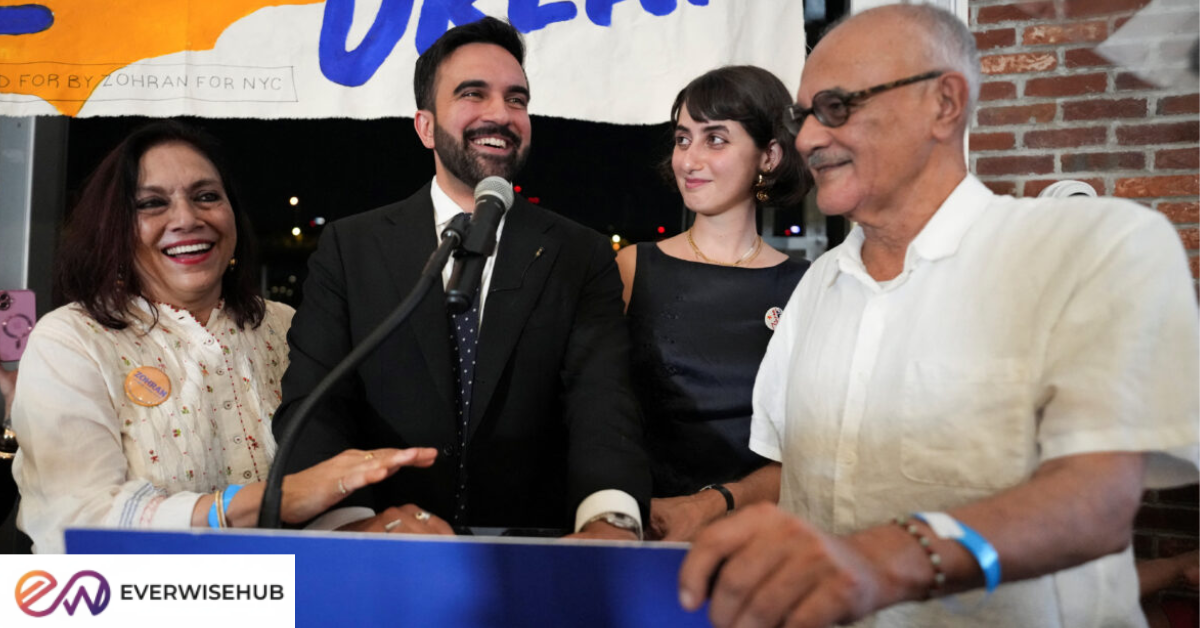
One example stands out: When Zohran won the Democratic primary in 2025, his parents joined him on stage, symbolizing their unbreakable bond. Moments like these humanize politics, showing how family legacies propel leaders forward.
Challenges and Triumphs in the Mamdani Family Legacy
Every family has its hurdles, and Zohran Mamdani parents are no exception. Mira faced early divorces and the pressures of Hollywood, while Mahmood dealt with academic controversies and exile. These trials built a foundation of grit that Zohran draws upon in tackling NYC’s issues like housing affordability and public transit.
On the triumph side, their achievements inspire. Mira’s films have grossed millions and won global acclaim, while Mahmood’s ideas influence policymakers worldwide. Together, they’ve created a legacy where art and intellect intersect with activism.
In a list of key family milestones:
- 1989: Mira meets Mahmood in Uganda
- 1991: Zohran’s birth and “Mississippi Masala” release
- 2001: “Monsoon Wedding” success
- 2021: Zohran enters NY State Assembly
- 2026: Zohran becomes NYC Mayor
These markers highlight a progression from personal stories to public impact.
The Broader Cultural Impact of Zohran Mamdani Parents
Beyond their son, Zohran Mamdani parents contribute to cultural dialogues. Mira’s work amplifies South Asian voices in cinema, challenging stereotypes. Mahmood’s scholarship pushes for nuanced views on Africa and the Global South. Their marriage itself – blending Indian and Ugandan-Indian heritages – models multicultural harmony.
In NYC, where diversity thrives, their story resonates. Zohran’s policies, like free buses and rent freezes, echo their values of equity. It’s a full-circle moment, seeing how parental influences ripple into city governance.
Conclusion
Wrapping up, the tale of Zohran Mamdani parents is one of inspiration, blending film, academia, and activism into a powerful narrative. Mira Nair and Mahmood Mamdani didn’t just raise a mayor; they nurtured a visionary shaped by global experiences. Their journey from Uganda to New York underscores the beauty of resilience and cultural fusion.
As Zohran leads NYC, their legacy lives on, reminding us that family roots can fuel extraordinary change. What do you think about how parental influences shape leaders? Share your thoughts in the comments or pass this article along to spark a conversation. After all, stories like this deserve to be told and retold.