
Introduction
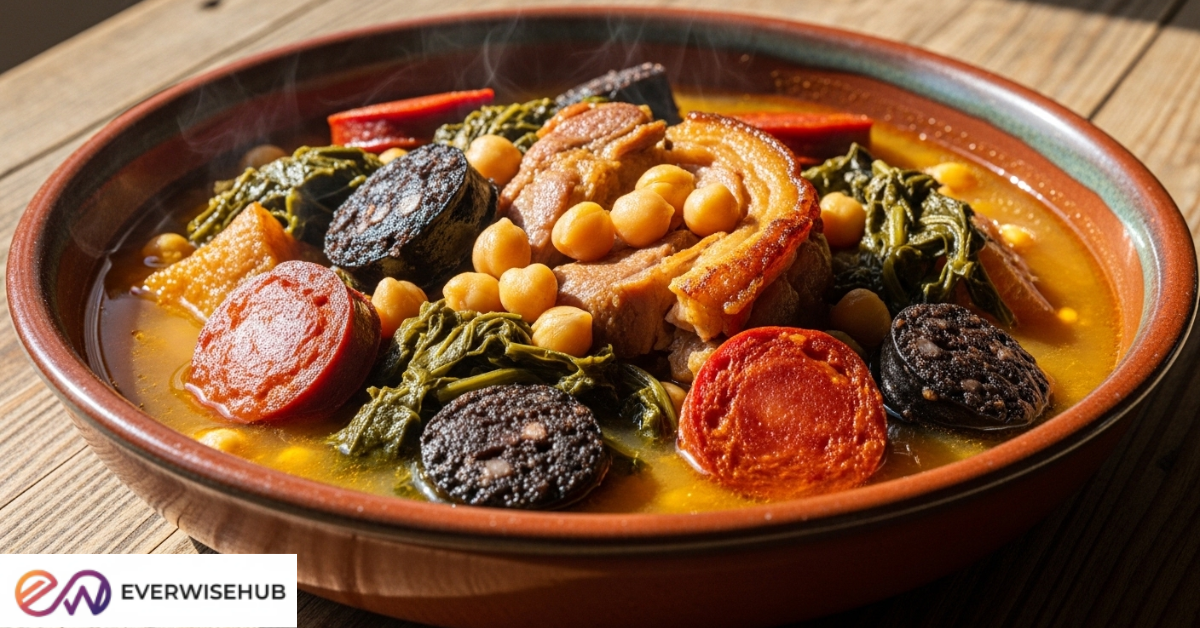
If you have found yourself typing “best cocido gallego near me” into a search engine, you already sense that something special is waiting at the end of that quest. Cocido gallego is not merely a soup or a stew — it is a deeply rooted expression of Galician culture, history, and identity. Originating in the lush, rain-kissed region of Galicia in northwestern Spain, this hearty, nourishing dish has traveled far beyond its homeland, landing on the tables of Spanish restaurants, Galician diaspora communities, and adventurous food lovers across the globe.
What makes the search for authentic cocido gallego so compelling is the gap between what is commonly served under that name and what a true, slow-cooked version of the dish actually tastes like. Getting it right — the right cut of lacón (salted pork shoulder), the right variety of grelo (Galician turnip greens), the right chickpeas, and the right balance of smoky chorizos and morcilla — is an art form that takes years to master. This guide is designed to help you find that mastery in a restaurant near you, understand what to look for when you do, and appreciate the full cultural story behind every spoonful.
What Is Cocido Gallego? A Deep Dive Into This Iconic Galician Dish
Before you can confidently find the best cocido gallego near you, it helps to understand exactly what you are looking for. The word “cocido” simply means “cooked” in Spanish, and across the Iberian Peninsula there are many regional variations of this slow-simmered one-pot meal. Madrid has its cocido madrileño, Extremadura has its puchero, and Galicia has its own proud version — the cocido gallego.
What distinguishes the Galician version from all others is a combination of locally sourced ingredients that reflect the agricultural and culinary traditions of the region. At its core, a well-made cocido gallego consists of chickpeas, various cuts of pork, and vegetables — particularly the grelo, which is a slightly bitter, leafy green unique to Galician cuisine and notoriously difficult to find outside the region. The richness of the dish comes from the slow merging of flavors between the caldo (broth), the meats, and the starchy legumes over several hours of cooking.
The Key Ingredients That Define Authenticity
Understanding the key components of cocido gallego will sharpen your ability to evaluate any restaurant claiming to serve it authentically.
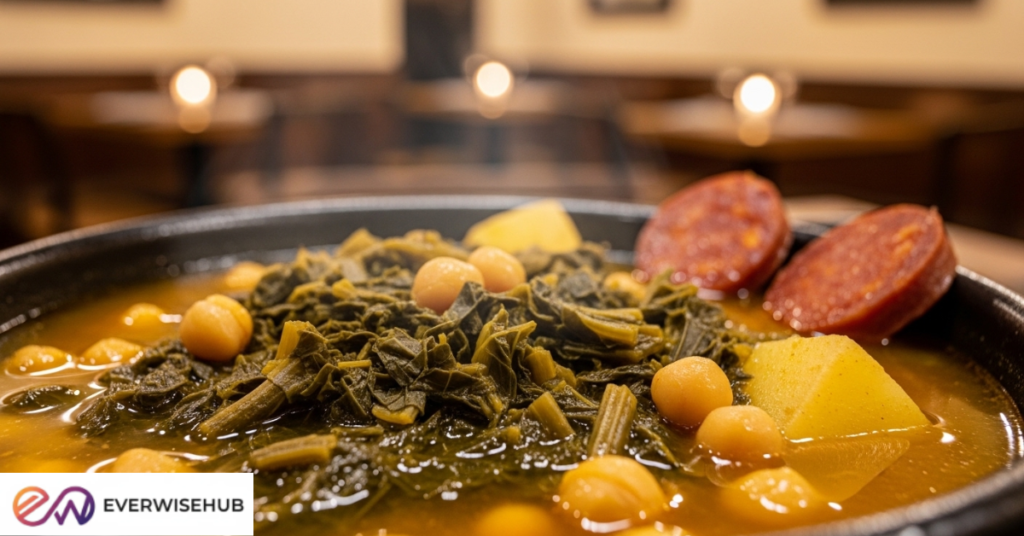
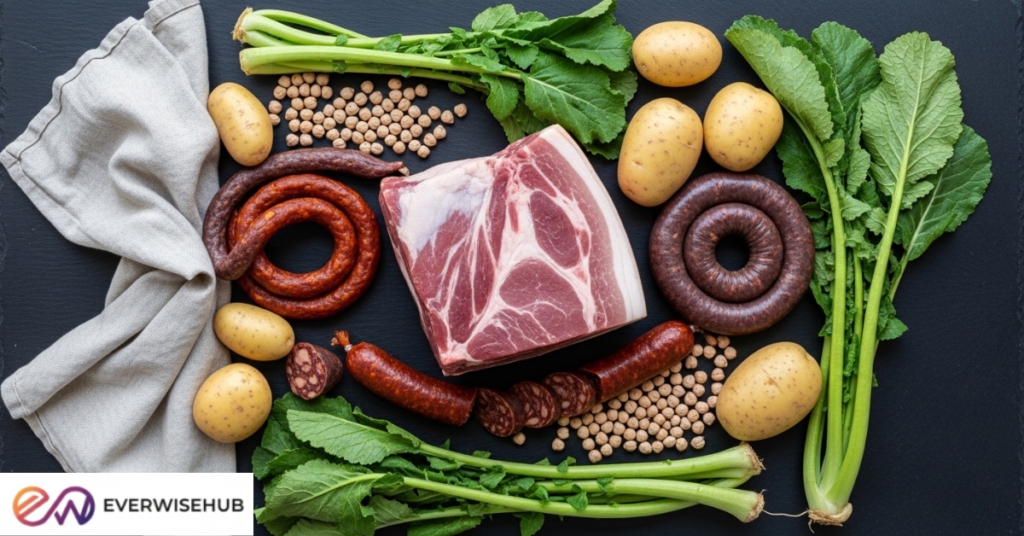
The first ingredient worth examining is the grelo. This dark, leafy green is a type of turnip top and is considered the soul of the dish. It has a mild bitterness that cuts through the richness of the pork and adds a brightness to the broth that no other vegetable can replicate. If a restaurant is using spinach, kale, or Swiss chard as a substitute, that is a clear signal that the dish has been adapted rather than authentically prepared.
The meat component of cocido gallego is equally defining. A properly made version will include lacón, which is a cured and then briefly soaked pork shoulder. Alongside this, you can expect cacheira (pig’s head or cheek), chorizo gallego (which is smokier and deeper in flavor than its Castilian cousin), morcilla (blood sausage), and sometimes costilla (ribs). Each of these meats brings its own character to the broth and, when combined, creates a depth of flavor that is impossible to fake with shortcuts.
Chickpeas rather than white beans are traditionally used, though some local variants in Galicia do incorporate both. The chickpeas absorb the smoky, savory broth during the long cooking process and become buttery and rich, practically melting on the tongue.
Finally, the broth itself — the caldo gallego — is what separates a mediocre cocido gallego from a transcendent one. A properly developed broth is golden, slightly opaque, deeply savory, and fragrant with the combined essence of everything that has been simmering inside it. This caldo is often served as a separate first course in a traditional setting, warming the stomach before the main components arrive at the table.
The Cultural and Historical Roots of Galician Stew
To truly appreciate cocido gallego, it is worth understanding where it comes from. Galicia is a region that occupies the far northwestern corner of the Iberian Peninsula, bordered by Portugal to the south and the Atlantic Ocean to the north and west. Its geography — characterized by rolling green hills, fjord-like rías, and a cool, wet climate — has shaped a cuisine that is fundamentally about warmth, sustenance, and community.
The origins of cocido gallego can be traced back centuries to the rural peasantry who needed high-calorie, warming meals to sustain them through long days of agricultural labor. The dish evolved as a way of using every available part of the pig, a tradition that has deep roots in Galician culture through the annual matanza (pig slaughter), which was both a practical necessity and a major social event in rural communities.
Over time, cocido gallego transitioned from a peasant staple to a beloved dish served in the finest Galician restaurants and at family celebrations. Today, it is most commonly eaten during the colder months — particularly from November through March — when the grelos are at their peak and a steaming bowl of this stew represents genuine comfort.
How to Find the Best Cocido Gallego Near Me
The phrase “best cocido gallego near me” is increasingly returning results as Galician cuisine has grown in global recognition. Here is a methodical approach to evaluating your local options.
Start With Galician-Specific or Regional Spanish Restaurants
The first filter to apply when searching for authentic cocido gallego is to narrow your search to restaurants that specifically identify as Galician rather than generically Spanish. A restaurant advertising “Spanish food” may or may not have the expertise or the ingredient sourcing necessary to produce a genuine version of this dish. Look for terms like “cocina gallega,” “restaurante gallego,” or “comida galiciana” in the restaurant’s name, tagline, or menu description.
Reviews and ratings platforms are valuable tools here. Search for cocido gallego on platforms like Google Maps, Yelp, or TripAdvisor and pay close attention to reviews that mention specific details — the texture of the grelos, the quality of the broth, or the variety of meats served. Generic positive reviews are less useful than specific ones that reveal knowledge of the dish.
Evaluate the Menu Before You Sit Down
A restaurant that takes cocido gallego seriously will typically offer it only on specific days — often Thursdays or Sundays, which is a longstanding tradition in many parts of Spain and among the Galician diaspora. If a restaurant offers cocido gallego every single day of the week without exception, that can occasionally be a sign of a simplified, lower-effort preparation, though there are certainly dedicated establishments that manage daily service without sacrificing quality.
Look for a menu that describes the components of the dish in some detail. Does it mention grelos? Does it list lacón specifically, or simply “pork”? Is the chorizo described as chorizo gallego? These details matter and they reveal whether the kitchen is staffed by people who understand the dish they are serving.
Ask About the Sourcing and Preparation
Do not hesitate to ask your server how long the cocido has been cooking, where the meats come from, and whether the grelos are imported. In a truly dedicated Galician restaurant — particularly one that caters to the Galician community — these questions will be met with pride rather than confusion. Chefs and restaurateurs who take this dish seriously are usually delighted to discuss their sourcing and methods.
Look for Cocido Gallego on Special Occasion Menus
Some of the best cocido gallego found outside of Galicia itself is served at community events, cultural associations, or seasonal festivals organized by Galician expatriate communities. In cities with large Galician populations — such as certain neighborhoods in Madrid, Buenos Aires, Montevideo, and New York — cultural centers called centros gallegos often organize communal lunches featuring traditional dishes prepared by cooks who learned the recipes from their grandmothers.
If you can find your way to one of these events, the cocido gallego you encounter is likely to be among the most authentic you will taste outside of Galicia itself.
Regional Variations of Cocido Gallego You Should Know
Like most great traditional dishes, cocido gallego is not a monolithic recipe. It varies from province to province and even from kitchen to kitchen within Galicia itself.
In the province of Lugo, for example, the dish tends to lean heavier on the pork and simpler in its vegetable component, reflecting the more inland, pastoral character of the region. In coastal areas like A Coruña or Pontevedra, you may find variations that incorporate more vegetables or a lighter broth, reflecting the influence of the sea-facing climate and culture.
Some versions incorporate patacas (Galician potatoes), which add another layer of heartiness and absorb the broth beautifully. Others include repollo (cabbage) alongside or instead of grelos, particularly in summer months when turnip tops are out of season. Understanding these variations helps you evaluate a restaurant’s interpretation of the dish as a deliberate creative choice rather than a substitution born of ignorance.
Pairing Cocido Gallego: What to Drink and Eat Alongside It
A proper cocido gallego experience extends beyond the stew itself. Knowing what to pair it with will elevate your meal and signal to any restaurant that you are a discerning guest.
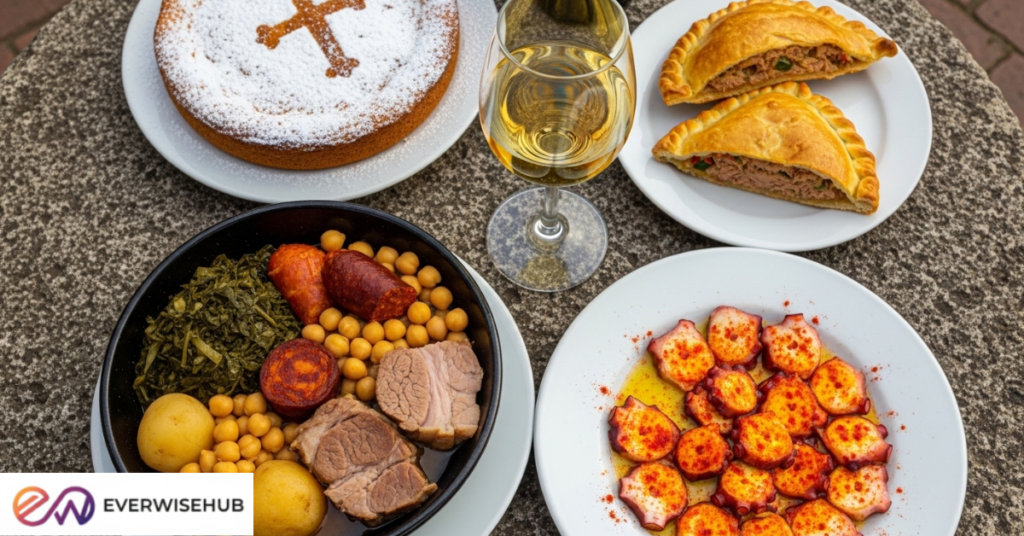
The natural wine pairing for cocido gallego is albariño, Galicia’s signature white grape variety. Its bright acidity, stone fruit notes, and saline mineral character make it an ideal counterpoint to the richness of the stew. If you prefer red, a mencía from the Ribeira Sacra DO — Galicia’s breathtaking inland wine region — offers earthy depth and gentle tannin that complements the smoky meats without overwhelming them.
Before the cocido, many traditional Galician restaurants will serve a portion of queixo de tetilla (the famous pear-shaped Galician cheese), empanada gallega (a savory filled pastry), or pulpo á feira (octopus prepared in the Galician style with olive oil, salt, and paprika). These are not mere starters — they are part of a cultural narrative that makes the eventual arrival of the cocido feel earned and celebratory.
For dessert, tarta de Santiago (almond cake adorned with the Cross of Saint James) or filloas (paper-thin Galician crepes) round out the experience beautifully.
How to Cook Cocido Gallego at Home When You Cannot Find It Nearby
If your search for the best cocido gallego near you comes up short, the answer may lie in your own kitchen. While preparing an authentic version requires some ingredient hunting, it is absolutely achievable.
The most important sourcing challenge is the grelos. In many cities with a strong Spanish or Portuguese food culture, specialty import shops or online retailers carry frozen or occasionally fresh grelos during their season. Failing that, cima di rapa (Italian turnip tops, also called rapini or broccoli rabe) is the closest substitute in terms of bitter character and texture, though the flavor profile is not identical.
For the meats, a good Spanish deli or charcuterie specialist should carry lacón and chorizo gallego. The key is to find chorizo that is smoked and seasoned with pimentón (Spanish paprika) rather than the fresh, unsmoked variety. Morcilla is widely available in Spanish specialty stores and increasingly in the international sections of well-stocked supermarkets.
The preparation requires patience above all else. The salted meats need to be soaked overnight to reduce their salt content. The chickpeas need a long soak as well. Then everything is brought together in a large pot with cold water and left to simmer for several hours — never boiled rapidly, always at a gentle, rolling simmer — until the broth has developed its characteristic golden depth and the meats are yielding and tender.
What the Growing Interest in Cocido Gallego Tells Us About Modern Food Culture
The increasing frequency of searches for the best cocido gallego near me reflects a broader trend in contemporary food culture: a renewed appetite for authentic, regional, and slow-cooked foods that carry genuine cultural weight. In an era dominated by fast food, fusion cuisine, and algorithmically optimized restaurant menus, there is a growing hunger — both literal and metaphorical — for dishes that tell a real story.
Cocido gallego tells the story of a people shaped by rain and sea and hard agricultural labor, who transformed humble ingredients into something that has endured for centuries and continues to comfort and nourish. It is the kind of dish that rewards patience, respects the seasons, and demands quality ingredients. These are values that resonate deeply with today’s more conscious and curious food lovers.
Galician cuisine as a whole has benefited from this shift in awareness. Alongside the global success of Galician octopus and albariño wine, the complex, meat-forward cocido gallego is earning its place on the international culinary stage — not because it has been redesigned or modernized, but precisely because it has not been.
FAQs
What is the difference between cocido gallego and cocido madrileño?
While both are Iberian stew traditions built around chickpeas and pork, cocido madrileño incorporates additional meats like chicken and beef, and uses different vegetables. Cocido gallego is defined specifically by grelos (Galician turnip greens), lacón (salted pork shoulder), and chorizo gallego, which gives it a smokier, more intensely porcine character.
When is the best season to eat cocido gallego?
Cocido gallego is a winter dish, traditionally consumed from October or November through March. This timing aligns with the peak season for grelos and the natural human desire for warming, calorie-dense food during colder months. Eating it in summer is possible but considerably less traditional.
Is cocido gallego difficult to find outside of Spain?
It depends on your city. In urban areas with significant Galician diaspora communities — particularly in Latin America and in major cities across the United States and Europe — authentic versions can be found. In areas without a Galician restaurant presence, it may be necessary to cook it yourself or find a broader Spanish restaurant that takes regional specialties seriously.
Can cocido gallego be made vegetarian?
Technically, the meats can be omitted and the dish rebuilt around a rich vegetable caldo with chickpeas and grelos, though this would be a substantial departure from the traditional recipe. Some modern Galician chefs have experimented with plant-based versions, but traditional practitioners would consider the pork essential to the dish’s identity.
What does grelo taste like?
Grelo, the turnip green that defines cocido gallego, has a mild but distinctive bitterness similar to broccoli rabe or radicchio, combined with an earthy, slightly sweet undertone. Blanching it before adding it to the stew moderates its bitterness and gives it a silky, tender texture that balances the richness of the pork.
Conclusion
Finding the best cocido gallego near you is a journey that will teach you something about patience, authenticity, and the extraordinary power of a well-made traditional dish. Whether you discover it in a tucked-away Galician restaurant, at a community event organized by a centro gallego, or at a table you have set yourself after a long day of slow cooking, the experience of eating a properly made cocido gallego is one that stays with you.
Look for the grelos. Taste the caldo before the main components arrive. Ask about the lacón. Pour a glass of albariño. And allow yourself to be transported — however briefly — to the green, rain-soaked hills of northwestern Spain, where this extraordinary dish was born.