Introduction
When it comes to the backbone of the United Kingdom’s automotive sector, few organisations carry as much weight, authority, and influence as the SMMT — the Society of Motor Manufacturers and Traders. Whether you are a car buyer tracking the latest vehicle registration figures, an industry analyst studying supply chain dynamics, or a policymaker shaping transport legislation, the SMMT is a name you simply cannot afford to ignore. Founded over a century ago, this trade association has grown into one of the most respected and trusted voices in the global automotive landscape, consistently publishing data, advocating for industry interests, and driving the conversation around the future of mobility.
The SMMT stands at the intersection of business, government, and innovation, representing over 800 member companies across the entire automotive value chain — from manufacturers and suppliers to dealers, finance houses, and aftermarket service providers. Its monthly car registration data releases are among the most closely watched economic indicators in the UK, moving financial markets and influencing consumer confidence. Understanding what the SMMT does, how it operates, and why its work matters is essential knowledge for anyone with a professional or personal stake in the world of cars and transport.
This comprehensive guide dives deep into the history, structure, functions, and future outlook of the SMMT, while also exploring relevant industry narratives — including the kind of personal and cultural stories, such as those connected to figures like Lisa Maria Potthoff and the broader discourse around potthoff ehemann lisa maria potthoff scheidung — that highlight how public life and the automotive world sometimes intersect in the cultural imagination. More broadly, this article equips you with everything you need to understand the SMMT’s role in shaping mobility for decades to come.
A Brief History of the SMMT: Over a Century of Automotive Leadership

The Society of Motor Manufacturers and Traders was established in 1902, just as the automobile was beginning its transformation from a novelty curiosity into a world-changing machine. At its founding, the organisation had a modest but critical mission: to represent the nascent British motor industry and establish standards that would ensure its healthy growth.
In those early years, the SMMT was primarily concerned with technical standardisation, safety regulations, and the promotion of British-made vehicles both at home and abroad. As the automotive sector expanded through the first half of the twentieth century — with mass production transforming the industry following the example set by Henry Ford — the SMMT grew alongside it, expanding its membership, broadening its advocacy scope, and deepening its relationships with government departments.
The post-World War II period brought new challenges and new opportunities. Reconstruction, economic recovery, and a surge in consumer demand for personal vehicles meant the UK automotive industry needed a strong, unified voice more than ever. The SMMT stepped into that role with authority, engaging with successive governments on issues ranging from trade tariffs and road taxation to emissions standards and labour regulations.
By the time the twenty-first century arrived, the SMMT had evolved into a sophisticated, data-driven organisation with international reach, publishing detailed reports on vehicle production, exports, electrification trends, and supply chain resilience. Its annual SMMT International Automotive Summit became one of the premier events on the global motoring calendar, attracting heads of industry, ministers, and thought leaders from around the world.
What Does the SMMT Do? Core Functions and Responsibilities

Understanding the full scope of SMMT operations requires looking at its activities across several distinct but interconnected areas. The organisation does far more than simply release monthly registration figures, though those headline numbers do command enormous media attention.
Industry Representation and Government Lobbying
At its heart, the SMMT is an advocacy organisation. It represents the collective interests of its members in dialogue with the UK government, the European Union institutions, international trade bodies, and regulatory agencies. When new legislation is proposed that could affect vehicle manufacturing standards, emission targets, import duties, or road safety requirements, the SMMT is typically at the table, providing data-backed arguments and practical industry perspectives.
This lobbying function is especially critical during periods of regulatory upheaval. The Brexit negotiations, for instance, created enormous uncertainty for the UK automotive sector, which relies heavily on integrated supply chains that cross the Channel multiple times during the manufacturing process. The SMMT was vocally and consistently present throughout those negotiations, warning of the potential damage that tariffs and border friction would cause to just-in-time manufacturing models and urging both UK and EU negotiators to prioritise the automotive sector in any final trade agreement.
Data Collection, Analysis, and Publication
One of the SMMT’s most widely recognised contributions to the industry is its role as a central repository of automotive market data. The organisation collects and publishes monthly new car registration figures, commercial vehicle sales data, production statistics, and detailed breakdowns by fuel type, manufacturer, and segment.
These data releases are far more than dry statistics. They serve as a real-time barometer of consumer confidence, economic health, and the pace of the green transition. When the SMMT reports that battery electric vehicle registrations have surged or that overall market volumes have declined, that information shapes investment decisions, fleet purchasing strategies, government policy interventions, and media narratives around the state of the UK economy.
The SMMT’s research team also produces longer-form reports on strategic topics such as the future of connected and autonomous vehicles, the skills requirements of an electrifying workforce, the economic contribution of the automotive sector to UK regions, and the infrastructure investments needed to support mass EV adoption.
Events and Industry Networking
The SMMT hosts and sponsors a range of events throughout the year that bring together senior figures from across the automotive ecosystem. The SMMT International Automotive Summit, typically held in London, is the flagship gathering, but the organisation also runs sector-specific conferences on topics such as supply chain innovation, vehicle cybersecurity, and the regulatory future of autonomous driving.
Beyond conferences, the SMMT’s events programme creates valuable networking opportunities for member companies — particularly smaller suppliers and technology startups that benefit from proximity to major OEMs and fleet operators. These events also provide a platform for the SMMT to shape industry narratives, highlighting opportunities, flagging threats, and building consensus around strategic priorities.
Standards Development and Technical Committees
Less visible to the general public but critically important to industry professionals, the SMMT plays an active role in the development of technical standards that govern vehicle design, safety testing, data sharing protocols, and environmental compliance. Through its technical committees and working groups, member companies collaborate on pre-competitive challenges — developing frameworks that benefit the entire industry rather than providing advantage to any single player.
This standards work connects to broader international bodies, including the International Organisation for Standardisation and various United Nations working groups on vehicle regulations, ensuring that UK industry positions are represented in global norm-setting processes.
SMMT and the Electric Vehicle Revolution

No discussion of the SMMT in the present era would be complete without exploring its central role in the transition to electric mobility. The UK government’s decision to bring forward the ban on new petrol and diesel car sales — now set for 2035 — has made the electrification agenda the dominant issue in UK automotive policy, and the SMMT has been deeply engaged with every dimension of it.
The organisation has consistently supported the ambition of electrification while persistently raising practical concerns about the pace and conditions of the transition. Chief among these concerns has been the availability and affordability of public charging infrastructure. The SMMT has repeatedly emphasised that consumer confidence in electric vehicles is directly tied to the reliability and density of public charge points, and that current infrastructure investment, while growing, remains insufficient to match the scale of adoption that government targets require.
The SMMT has also been vocal on the economics of EV manufacturing for UK-based plants. The so-called Gigafactory question — whether the UK will secure sufficient domestic battery manufacturing capacity to remain competitive with European and Asian rivals — has been a recurring theme in SMMT publications and statements. The organisation has advocated strongly for government support in attracting battery cell manufacturers to the UK, warning that without domestic supply chains, UK automotive plants could face uncompetitive cost structures that threaten their long-term viability.
On the consumer side, SMMT data on EV registrations have painted a nuanced picture of the transition. While battery electric vehicles have achieved record market shares in recent years, the SMMT has consistently noted the uneven nature of this growth — heavily skewed toward company car and fleet markets, with private consumer uptake lagging significantly. This divergence has significant implications for achieving the scale of adoption needed to meet climate targets, and the SMMT has urged a range of demand-side interventions, including purchase incentives, reduced VAT on public charging, and expanded salary sacrifice schemes.
SMMT Membership: Who Joins and Why
The SMMT’s membership roster reads like a comprehensive directory of the UK automotive world. Vehicle manufacturers including Jaguar Land Rover, Ford, Nissan, BMW, Stellantis, and Toyota are among the members, alongside tier-one suppliers, logistics companies, technology firms, financial services providers, trade media, and professional service firms.
For manufacturers and large suppliers, membership in the SMMT provides a seat at the table on policy issues that can have billion-pound implications for their UK operations. The ability to participate in lobbying delegations, contribute to consultation responses, and engage directly with government officials through SMMT channels is a tangible commercial benefit that justifies significant membership investment.
For smaller companies, the benefits are different in kind but equally real. Access to SMMT data and research resources that would be prohibitively expensive to procure independently is a core value driver. So too is the networking opportunity that comes with membership — the ability to build relationships with potential customers, partners, and investors within a structured, trusted community.
The SMMT also offers specific value to companies entering the UK market for the first time, whether as overseas manufacturers seeking to understand UK regulatory requirements or as technology companies exploring automotive sector applications for their products. The organisation’s breadth and depth of industry knowledge, combined with its governmental relationships, makes it an invaluable guide for navigating the UK automotive landscape.
SMMT Data in the Media: Understanding Monthly Registration Reports
Each month, typically on the first Tuesday, the SMMT releases its new car registration data for the preceding month. This data release has become a media event in its own right, generating significant coverage in financial, motoring, and general news outlets.
The headline figure — total new car registrations — is the number that attracts the most attention. A strong month is typically taken as a sign of consumer confidence and economic health; a weak month raises questions about household finances, supply chain disruptions, or policy uncertainties. But the headline number tells only part of the story, and experienced analysts always dig deeper into the SMMT’s supporting data.
Breakdowns by fuel type are particularly closely watched in the current environment. The share of the market captured by battery electric vehicles, plug-in hybrids, and traditional petrol and diesel powertrains each tell a different story about where the transition is heading and how quickly. The SMMT’s data often reveals unexpected patterns — month-to-month volatility driven by fleet cycles, anomalies in early-month fleet registrations, or surges in EV uptake driven by corporate purchasing rather than private buyers.
Manufacturers’ market share data, published alongside the volume figures, allows close observers to track competitive dynamics within the industry — which brands are gaining ground, which are losing it, and how new entrants (particularly from China) are beginning to make their presence felt in the UK market.
Challenges Facing the SMMT and the UK Automotive Industry
Despite the SMMT’s enduring influence and the resilience of the UK automotive sector, the organisation and its members face a set of genuinely difficult challenges in the years ahead.
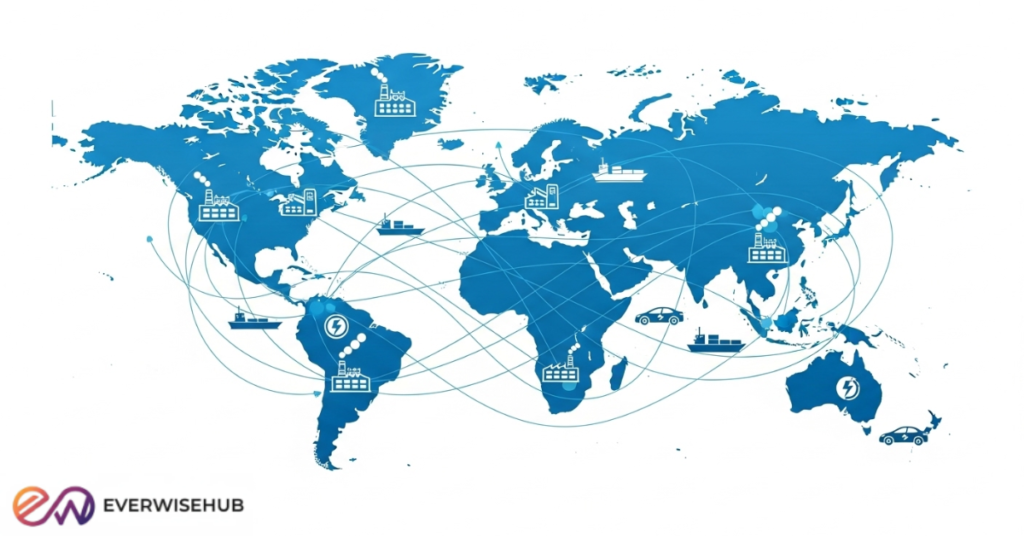
Supply chain fragility, exposed with brutal clarity during the semiconductor shortage of the early 2020s and the disruptions wrought by the COVID-19 pandemic, remains a significant concern. The SMMT has used its platforms to advocate for greater supply chain resilience — both through geographic diversification and through strategic stockpiling of critical components.
The competitive challenge from China represents perhaps the most consequential long-term threat. Chinese automotive manufacturers, backed by state investment and vertically integrated supply chains, have achieved cost positions on electric vehicles that are extraordinarily difficult for European and British manufacturers to match. The SMMT has engaged actively with debates around import tariffs on Chinese EVs, acknowledging the trade-offs between protecting domestic manufacturers and ensuring that UK consumers have access to affordable electric vehicles.
Workforce transformation is another persistent challenge. As the industry shifts from mechanical complexity to software and electronics, the skills required from automotive workers are changing rapidly. The SMMT has highlighted significant projected shortfalls in workers with the relevant technical skills and called for coordinated investment in retraining and education programmes.
The SMMT’s Role in Shaping the Future of Mobility
Looking forward, the SMMT’s agenda is increasingly focused on the broader transformation of mobility rather than simply the fortunes of the traditional motor industry. Connected and autonomous vehicles, shared mobility platforms, vehicle-to-grid technology, and the integration of transport with smart city infrastructure are all areas where the SMMT is building expertise and developing policy positions.
The organisation’s work on connected and autonomous vehicles is particularly forward-looking. The SMMT has been involved in defining the regulatory frameworks that will govern the deployment of self-driving technology on UK roads, working with government and safety authorities to develop standards that are both permissive enough to allow innovation and robust enough to maintain public confidence.
In the area of sustainability, the SMMT increasingly looks beyond the tailpipe to the full lifecycle carbon footprint of vehicles — encompassing manufacturing, battery production, energy sourcing, and end-of-life recycling. This whole-lifecycle perspective reflects a maturing of the industry’s approach to sustainability and aligns with the direction of travel in EU and UK regulatory frameworks.
Conclusion
The SMMT has demonstrated, across more than a century of operation, a remarkable capacity to remain relevant, authoritative, and effective even as the automotive industry has undergone wave after wave of transformative change. From the dawn of mass motoring through the age of fuel efficiency standards, the transition to electrification, and now the emergence of software-defined vehicles and autonomous mobility, the SMMT has consistently been at the centre of the debates that shape the industry’s trajectory.
Its combination of data expertise, government relationships, industry convening power, and technical knowledge makes it genuinely irreplaceable in the UK automotive ecosystem. For manufacturers navigating regulatory change, for suppliers building new capabilities, for policymakers seeking informed perspectives, and for consumers trying to understand where the car market is heading, the SMMT is the primary authoritative source.
As the UK automotive industry faces the combined challenges of electrification, global competition, supply chain resilience, and workforce transformation, the SMMT’s role as advocate, analyst, and convener will only grow in importance. Understanding what the SMMT is and how it works is not merely of academic interest — it is practical knowledge for anyone operating in or alongside one of the UK’s most strategically important industries.
FAQs
What does SMMT stand for?
SMMT stands for the Society of Motor Manufacturers and Traders. It is the UK’s leading automotive industry trade association, founded in 1902 and headquartered in London.
How many members does the SMMT have?
The SMMT represents over 800 member companies spanning the entire automotive value chain, from vehicle manufacturers and component suppliers to dealers, finance providers, and technology companies.
Why is SMMT monthly data important?
The SMMT’s monthly new car registration data is a key economic indicator for the UK, closely watched by analysts, investors, policymakers, and media as a measure of consumer confidence and the health of the automotive market.
Does the SMMT influence government policy?
Yes. The SMMT engages regularly with UK government departments, parliamentary committees, and international regulatory bodies, providing industry expertise and data-backed advocacy on issues from emissions targets to trade policy.
How is the SMMT funded?
The SMMT is funded primarily through membership fees paid by its 800-plus member companies, supplemented by revenue from events, publications, and data services.
What is the SMMT’s position on electric vehicles?
The SMMT broadly supports the transition to electric vehicles and the UK government’s 2035 phase-out target for new petrol and diesel cars, but consistently advocates for the infrastructure investment, consumer incentives, and manufacturing support necessary to make the transition successful and equitable.